 US
US

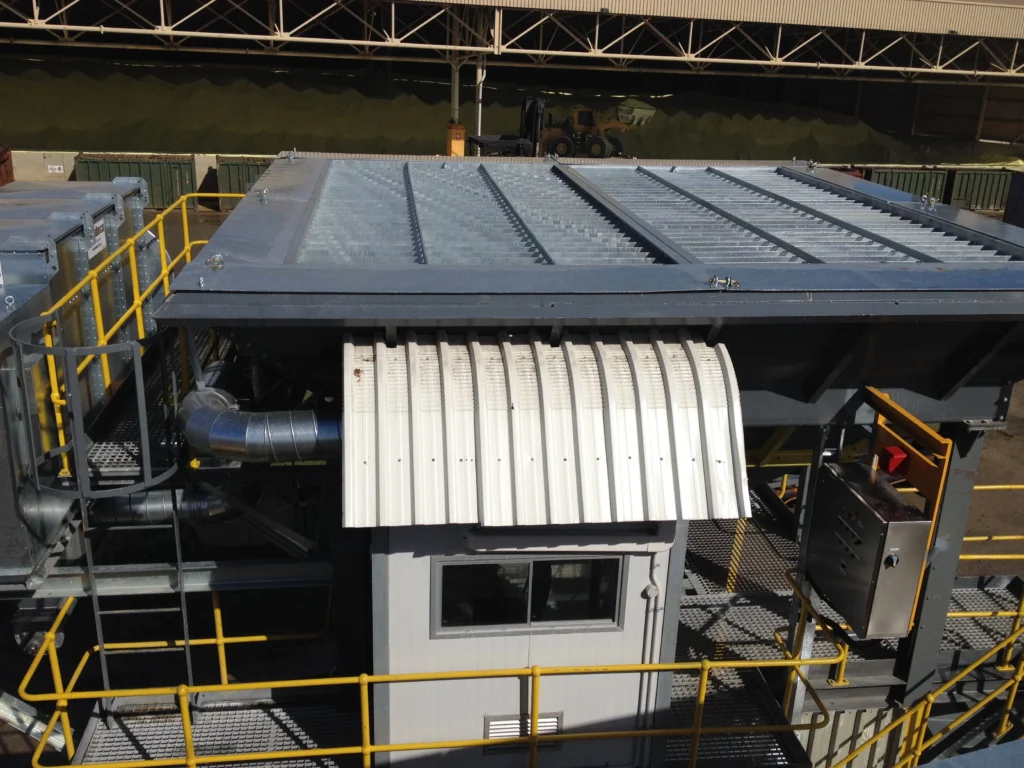


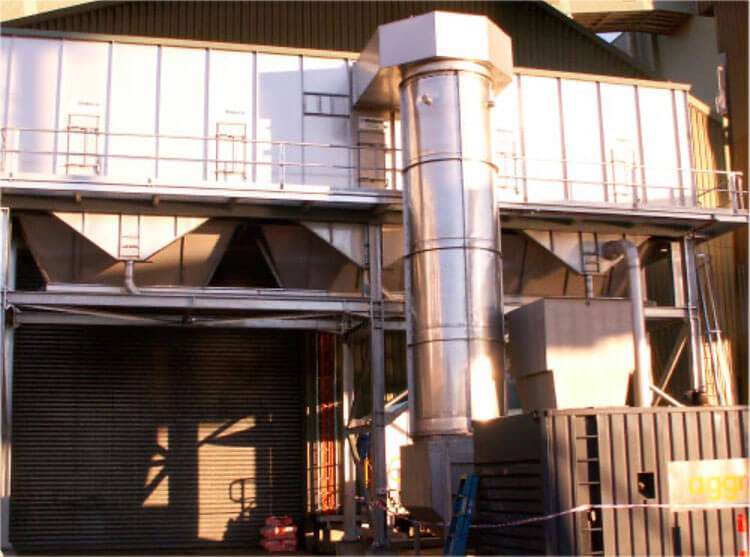


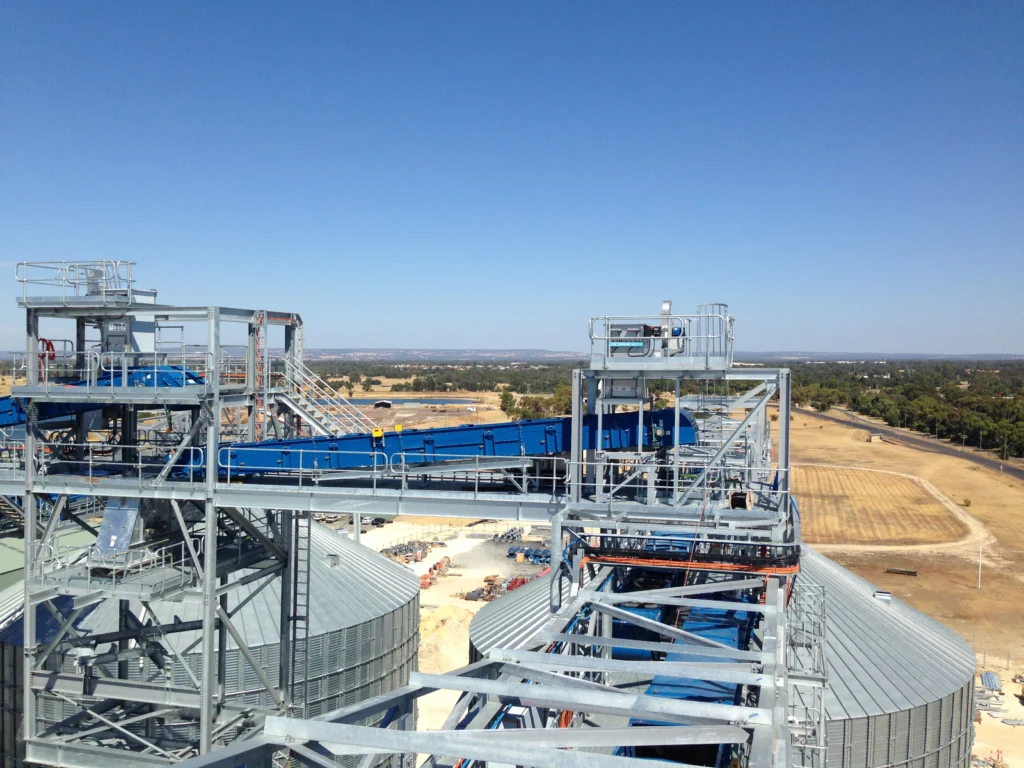
Dust extraction systems play an important role in the safety of modern industrial workplaces. Despite the popularity, understanding how a dust extraction system works often remains a mystery.
This information is crucial for improving air quality, protecting workers, and staying compliant with strict industrial regulations on Work Health and Safety. Let’s unpack the process in clear, practical terms and highlight how extraction works in terms of the wider dust management approach.
What is a dust extraction system?
A dust extraction system is a localised exhaust ventilation setup that pulls dust away from a worker’s breathing zone. This is carried out at the moment it’s generated, using capture hoods, ductwork, fans, and filters to remove hazardous particulate before it becomes airborne.
Dust extraction improves indoor air quality, reduces silica and fine particle exposure, and helps industrial facilities meet workplace exposure standards. While it plays a different role from dust collection and dust suppression, it often works alongside them as part of full-site dust management.
Why dust extraction matters in industrial environments
Industrial sites from workshops to mineral processing facilities produce harmful dust. This byproduct of the manufacturing or production process can harm people, equipment, and the environment. Effective extraction supports in the following:
Health protection: Fine dust and respirable crystalline silica can cause initial lung irritation, progress to persistent lung injury, and ultimately lead to long-term disease. It also leads to reduced visibility over sustained exposure.
Compliance Requirements: Australian industries must meet strict WHS and environmental standards across mining, quarries, manufacturing, ports, grain handling, cement production, and more.
Clean Operations: Better quality air means less equipment wear, fewer breakdowns, and safer working conditions for everyone.
Breaking down the components of a dust extraction system
Dust extraction relies on several key components working together. Each plays its part, and each is integral to keeping your workplace safe.
Capture hood/extraction point
Located as close as possible to the dust source, the capture hood collects dust immediately right at the point of generation.
Ducting system
Carries contaminated air from the extraction point to the filtration unit. Good ducting design maintains airflow velocity and reduces risk of blockages.
Fan/blower unit
Creates the negative pressure needed to pull dust-laden air through the system.
Filtration mechanisms
Different filtration technologies apply depending on your workspace and dust type. In dust extraction systems, filters treat smaller, targeted air volumes. In dust collection systems, they manage large-scale airborne dust.
Available dust management solutions
Cyclone separation (Mideclone)
The Mideclone is a cyclone dust collector designed for high-efficiency separation of coarse and fine particles. While it is predominantly a dust collection device, it can support a dust extraction setup when used as part of a localised system.
Burnley® Baffles
The Burnley Baffles are not extraction components. They are a dust suppression device that controls airflow at hoppers and transfer points to prevent dust from becoming airborne in the first place. They complement extraction by trapping dust and reducing the air volume your extractor must handle, allowing dust collectors to work more efficiently and with lower power demand.
Scrubbing systems
Scrubbing systems use liquid-based filtration to remove fine dust and gaseous contaminants. They are primarily used in processing environments with heavy dust load and toxic gas streams, but can be integrated into extraction when the application is localised.
Reverse air filters
These are large-scale dust collection units that clean themselves using reverse airflow. They are suitable for heavy industries needing significant filtration capacity. They can be paired with extraction systems when they serve as the main filter for extracted air.
Dust collector / collection unit
Stores captured dust safely for disposal. In extraction setups, this may be built into the filtration body as a mobile device or connected externally.
Monitoring & control systems
Sensors and automated controls monitor airflow, filter health, pressure, and system performance.
A step-by-step guide to how dust extraction systems work
A dust extraction system follows a controlled sequence:
Step 1: Dust capture at the source
Dust is captured immediately at the point of generation through a capture hood or local exhaust.
Step 2: Movement through ducting
Contaminated air travels through ductwork which purpose is to maintain airflow velocity and prevent dust settlement.
Step 3: Airflow into the dust collector
The fan system then drives air into the filtration equipment.
Step 4: Separation & filtration
Next is filtration and separation. Different filtration processes remove dust based on its size and behaviour:
- Coarse particles are separated through cyclone action or gravitational settling.
- Fine particles can be removed using filter media, reverse air technology, or wet scrubbing.
- Wet scrubbing fundamentals use scrubbing systems to capture sticky or ultra-fine particles by making them bind to a liquid medium.
Step 5: Clean air is returned
Clean, filtered air is then released outdoors (collection) or returned to the workspace (extraction).
Step 6: Dust disposal process
Collected material is stored and removed safely to avoid secondary contamination.
Explore our dust extraction systems
Extraction systems vary based on dust type, process, and industry requirements.
Baghouse / filter-based systems
Use large fabric filters to remove fine airborne dust. More common in dust collection, but can support extraction when treating the extracted air stream.
Cyclone dust collectors (Mideclone)
High-efficiency cyclones remove heavier particles before air reaches finer filters. Mainly dust collection, occasionally part of extraction setups.
Wet scrubbers
Ideal for sticky, moist, or hazardous particulates. Often used in processing environments where water-assisted filtration is needed.
Local exhaust ventilation (LEV)
This is true dust extraction that captures dust at the source with hoods, ducting, and filters.
Personnel dedusting systems (Bat Booth®)
The Bat Booth® protects workers by removing harmful dust from clothing and PPE in seconds. This is personnel de-dusting or dust extraction from clothes, which plays a critical role in preventing dust from being carried into vehicles and buildings.
Where dust extraction systems are used
Dust extraction supports high-risk environments across industries:
- Mining: Heavy dust loads, silica risks, and constant movement of material.
- Quarries: Crushing, screening, and transport create airborne dust that extraction captures at the source.
- Cement plants: High-temperature, fine particulate dust requiring specialised extraction and collection systems.
- Grain and agricultural facilities: Fine organic dusts that can cause explosions or respiratory issues.
- Timber and biomass handling: Wood dust requires point-of-source extraction in sawmills, workshops, and biomass facilities.
Benefits of an effective dust extraction system
An efficient extraction setup delivers measurable improvements:
- Protects workers from harmful airborne dust
- Meets WHS exposure limits
- Reduces wear on equipment and machinery
- Improves visibility and safety
- Reduces downtime from cleaning and repairs
- Supports environmental compliance
Upgrading to the right dust extraction system
Key factors will influence which system suits a specific site. Dust type shapes the level of risk because silica, organic dust, metal dust, and fine particulates behave differently in the air. Particle size and movement also determine how easily dust becomes airborne and how quickly it settles. Airflow volume and velocity both matter because they control how effectively a system captures, moves, and filters dust through the network.
Space limitations guide system design because some facilities can only support compact extraction points while others can house large central collectors. Industry hazards influence the level of protection needed. Compliance requirements set the minimum control standards. The availability of engineering support ensures the system is installed, maintained, and adapted to changing conditions.
Final thoughts
Understanding how a dust extraction system works allows businesses to improve workplace safety, protect equipment, and remain compliant.
Contact Mideco today for a solution to your industrial dust. See how we can safeguard your business with expert dust management that won’t let you down.