

Home » United States » Industrial Dust Control Applications »
Control Room and Cabin Pressurization and Filtration for Dusty Industrial Sites

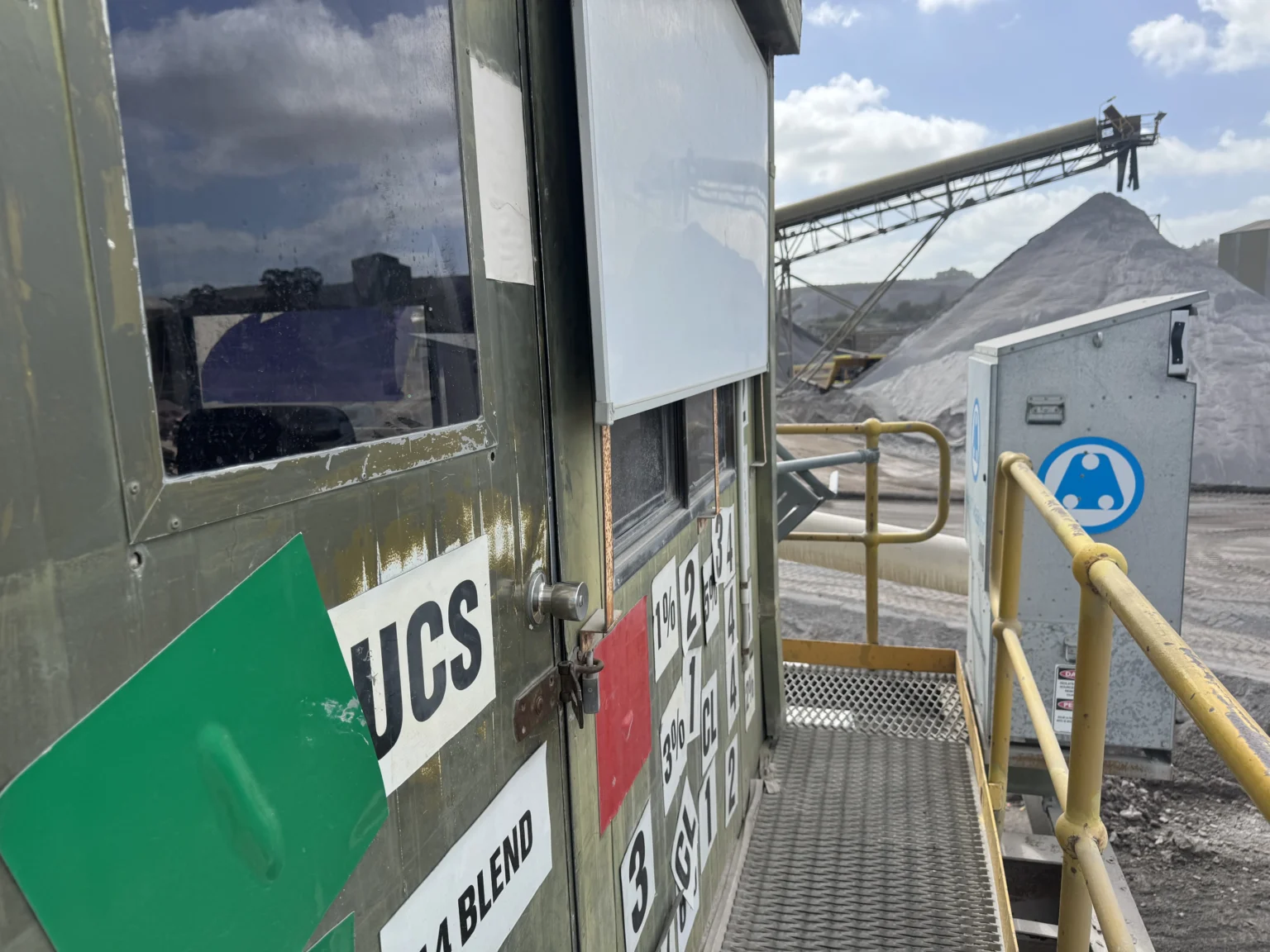
Sealed rooms on dusty industrial sites are rarely as sealed as they look. Every door open, cable gland, and construction gap is a path for respirable dust to enter. Workers stepping off the plant floor into a control room for a break are often still breathing the same air.
Mideco engineers leading fixed room pressurizer solutions that manage dust in industrial sites. Our systems improve worker health and safety, protect equipment, and keep your facility compliant at all times.
Enquire nowWhat Room Pressurization Does
A positive pressure unit draws outside air, filters it, and delivers it into the room at above-ambient pressure. Because indoor pressure is higher than outside, leakage flows outward through gaps and penetrations. Unfiltered plant air cannot passively enter.
This differs from recirculating air cleaners, which filter indoor air but do nothing about ingress. If dusty plant air is entering faster than a recirculator can process it, the indoor dust load keeps building. Room pressurization controls the source of ingress rather than treating the consequence.
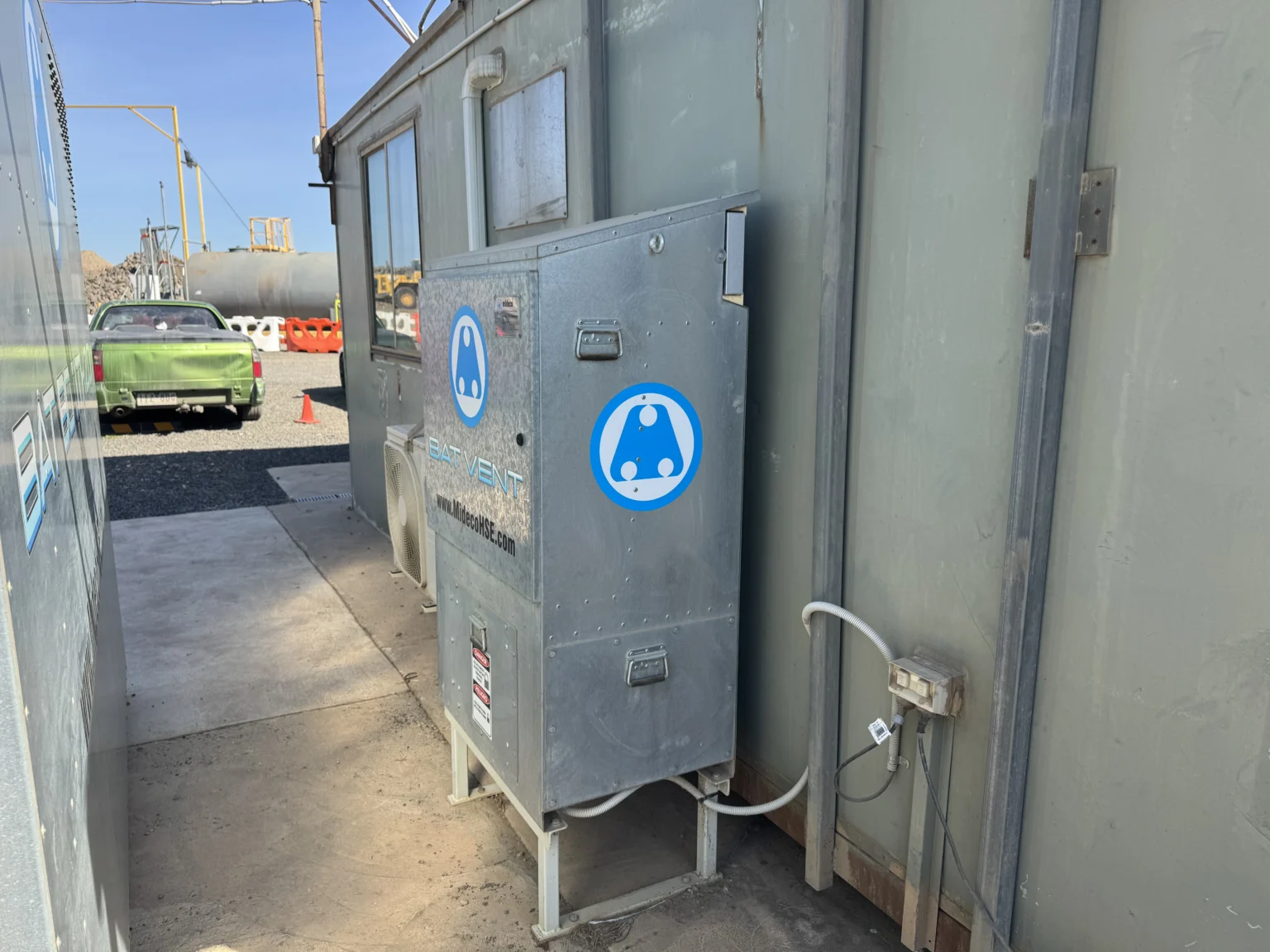
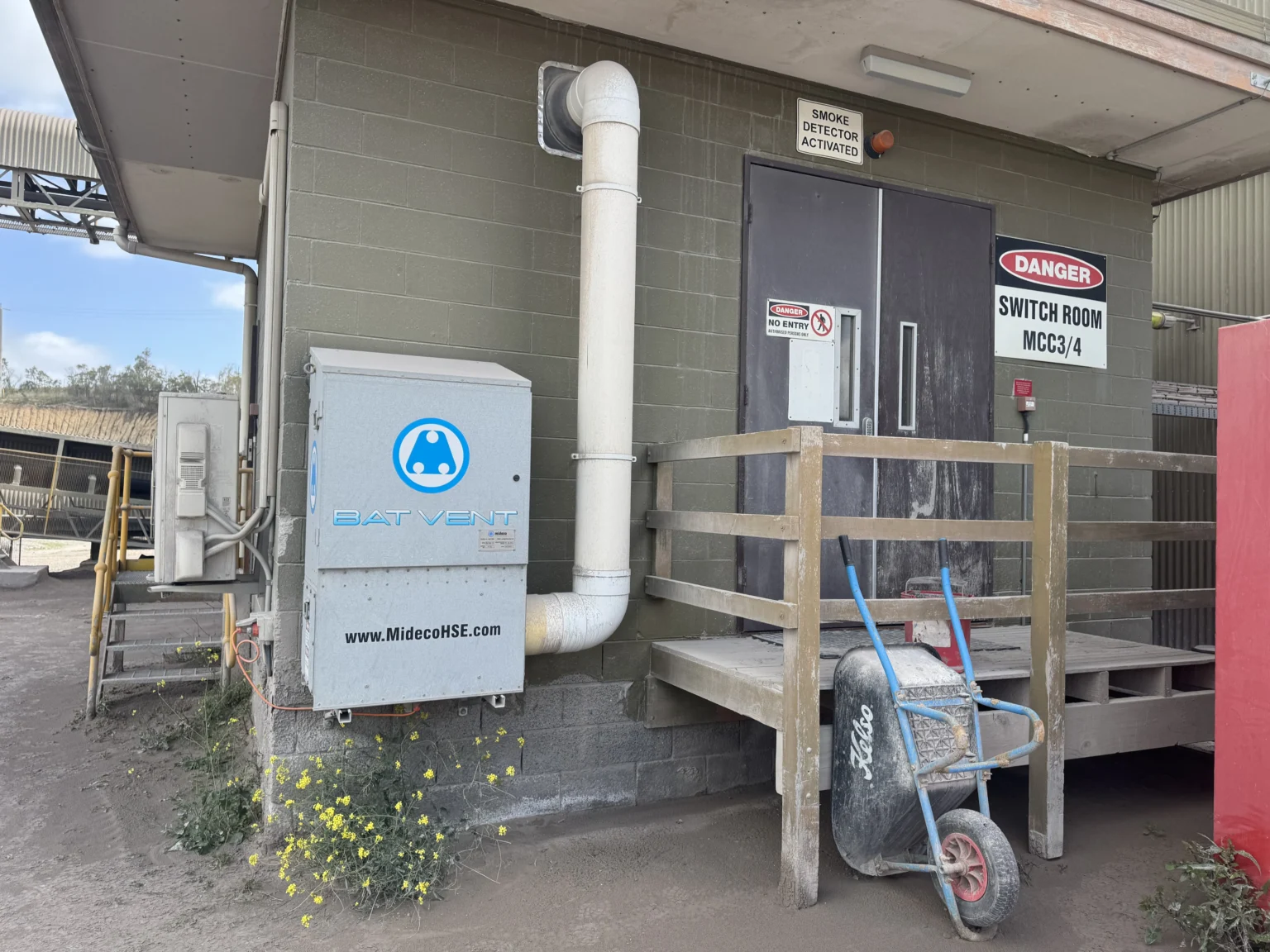
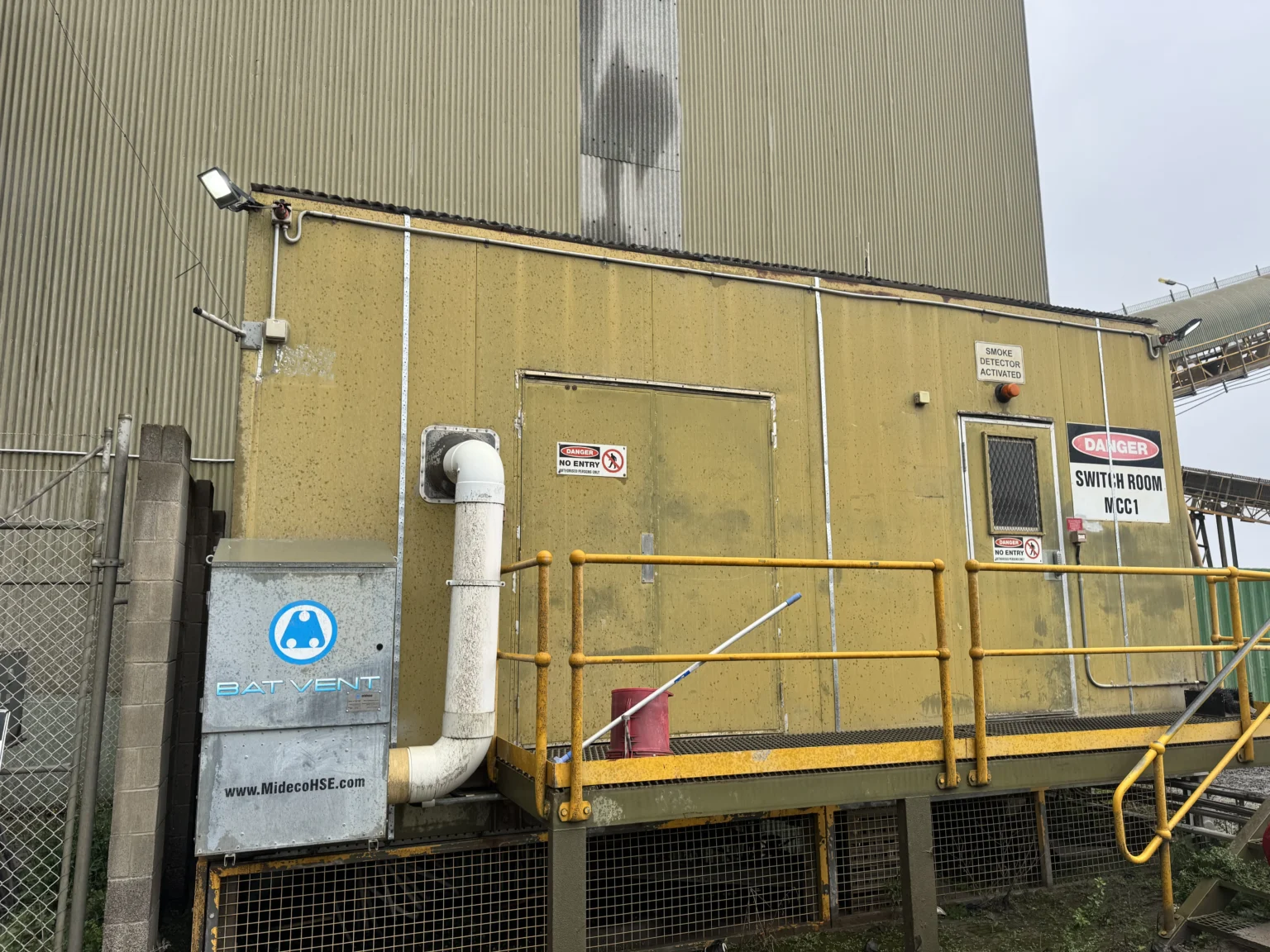
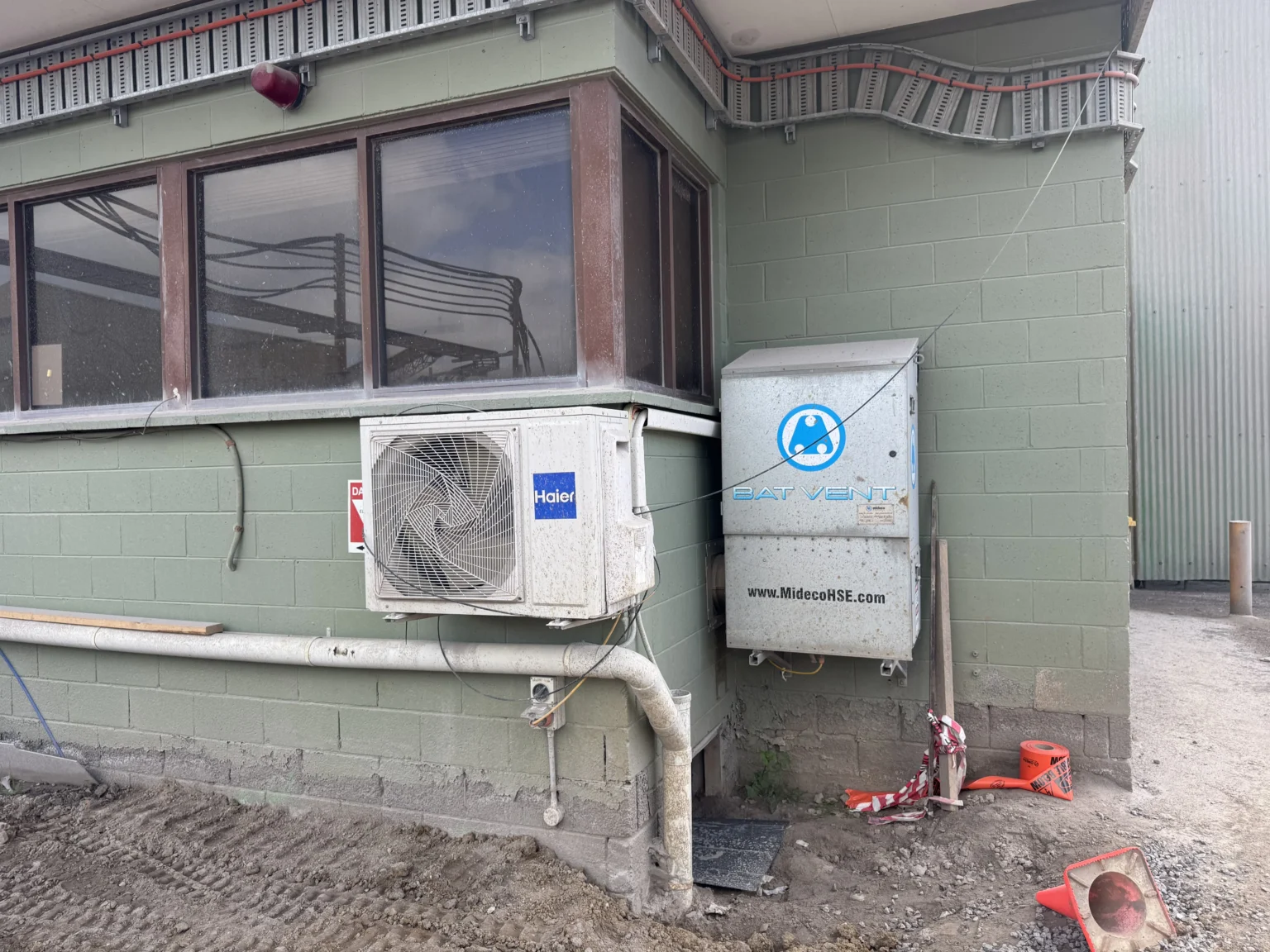
Rooms and Cabins That Need It
Any occupied space adjacent to a high-dust process zone is a candidate:
- Control rooms and dispatch offices
- MCC and electrical rooms
- Switch rooms
- Weighbridge and sampling offices
-
Laboratories and sample-prep rooms
- Crib and break rooms
- Operator cabins and static equipment cabs
Electrical room pressurization and MCC room pressurization serve a secondary function beyond occupant protection: they prevent conductive dust accumulation on switchgear and control systems. A cab pressurizer on a static equipment cab or weighbridge protects both the operator and the electronics.
Enquire nowPositive Pressure Unit, Air Purifier or Air Conditioner: What Is the Difference?
Specifiers often treat these three as interchangeable, but they do different jobs. A positive pressure unit draws filtered outside air in and holds the room above ambient pressure, so leakage flows outward and untreated air cannot get in. An air purifier recirculates and cleans the air already in the room and does nothing about ingress. An air conditioner manages temperature and humidity, typically recirculates, and can move dust around rather than remove it.
The overlap is where the confusion starts. A pressurization unit can also recirculate filtered internal air once target pressure is reached, so it can look like an air purifier on paper. The difference is ingress: only the positive pressure unit stops untreated air from entering the room.
| Unit | What it does | What happens to ingress | Best fit |
|---|---|---|---|
| Positive pressure unit | Draws in filtered outside air and holds the room above ambient pressure | Stopped: leakage flows outward, so untreated air cannot enter | Occupied rooms and cabins on dusty sites |
| Air purifier | Recirculates and cleans the air already in the room | Not addressed: dust keeps leaking in through doors and gaps | Cleaning room air where ingress is not the problem |
| Air conditioner | Manages temperature and humidity, typically by recirculating | Not addressed: can move dust around rather than remove it | Temperature and humidity control |
Filtration Stages and What They Capture
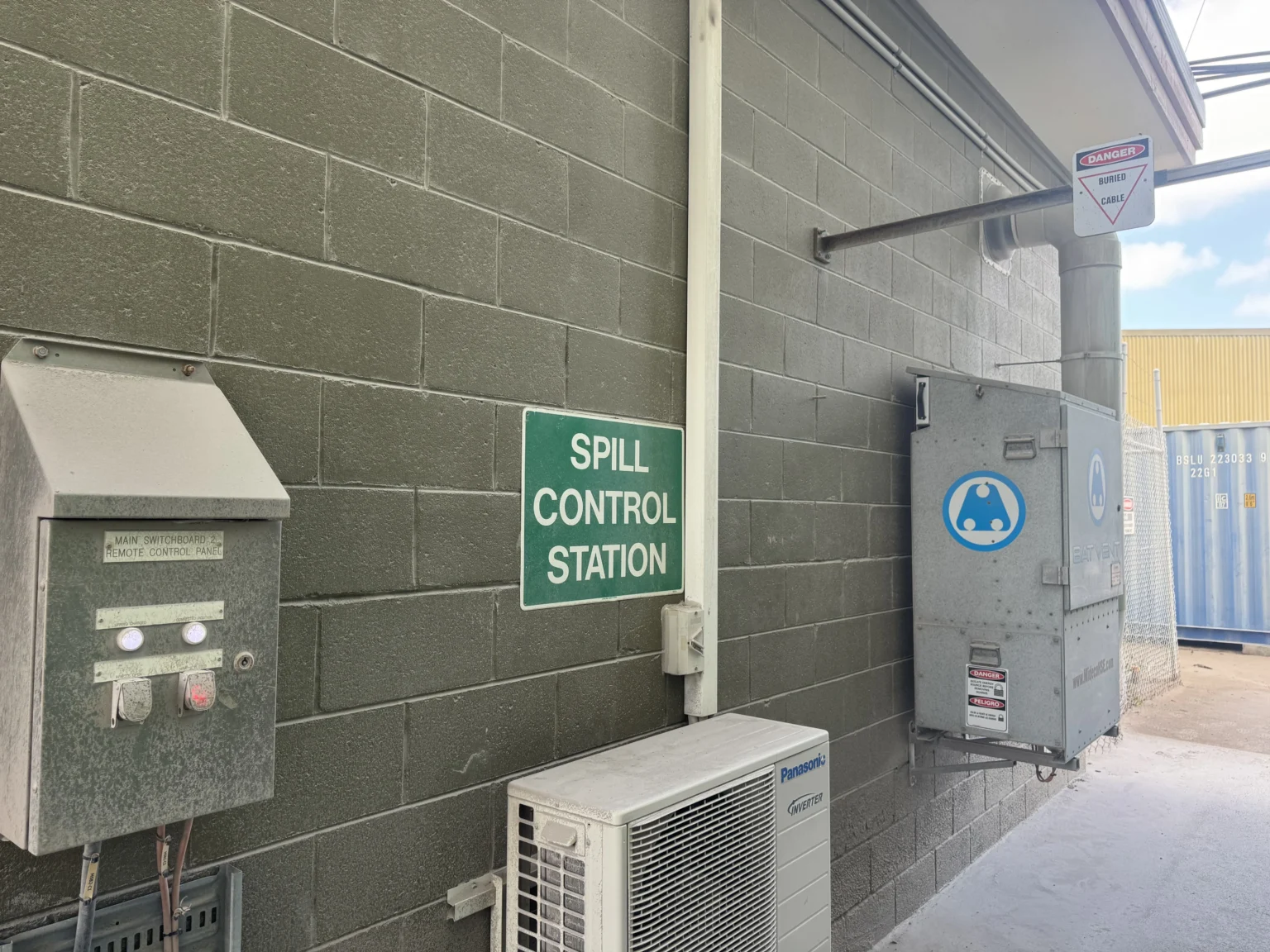
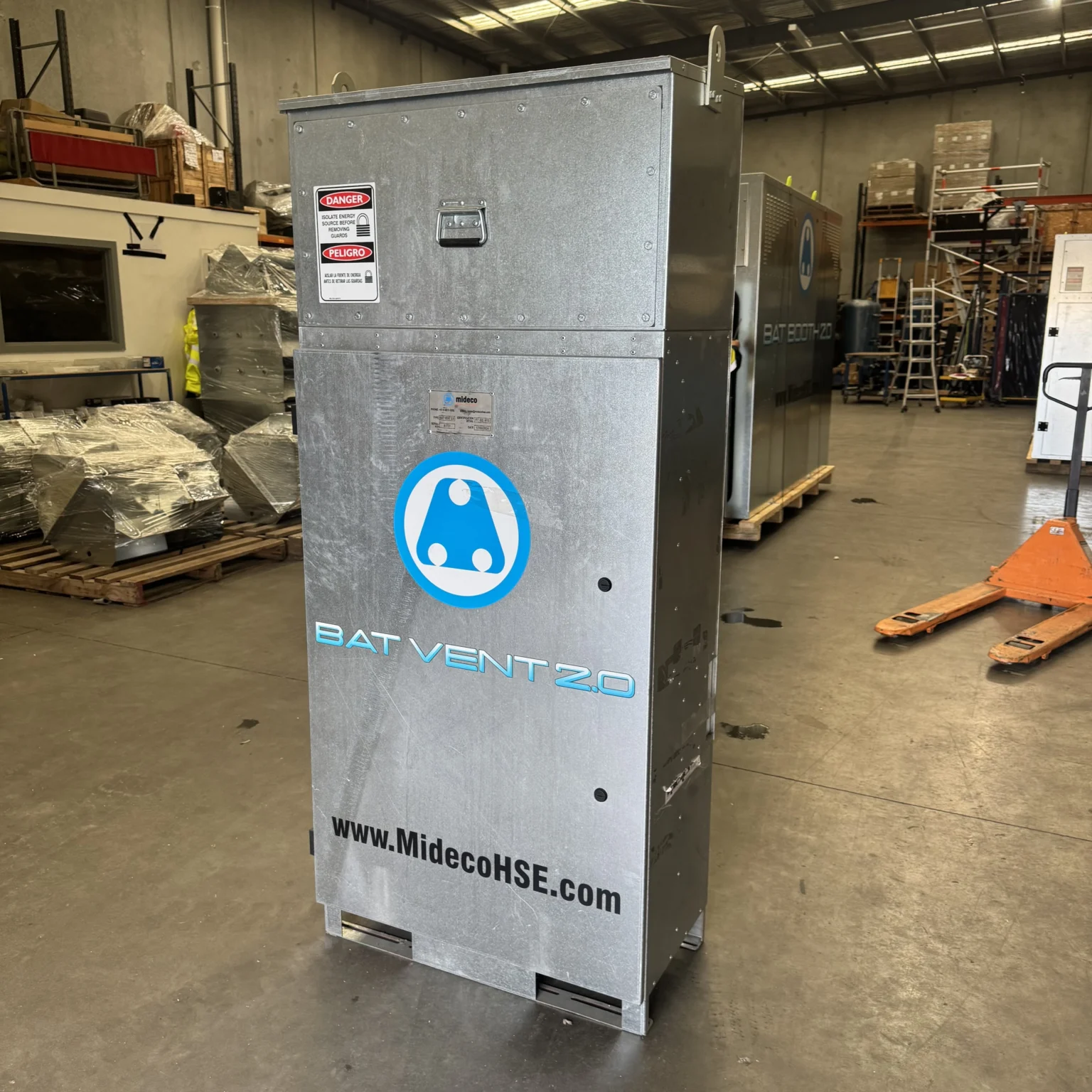
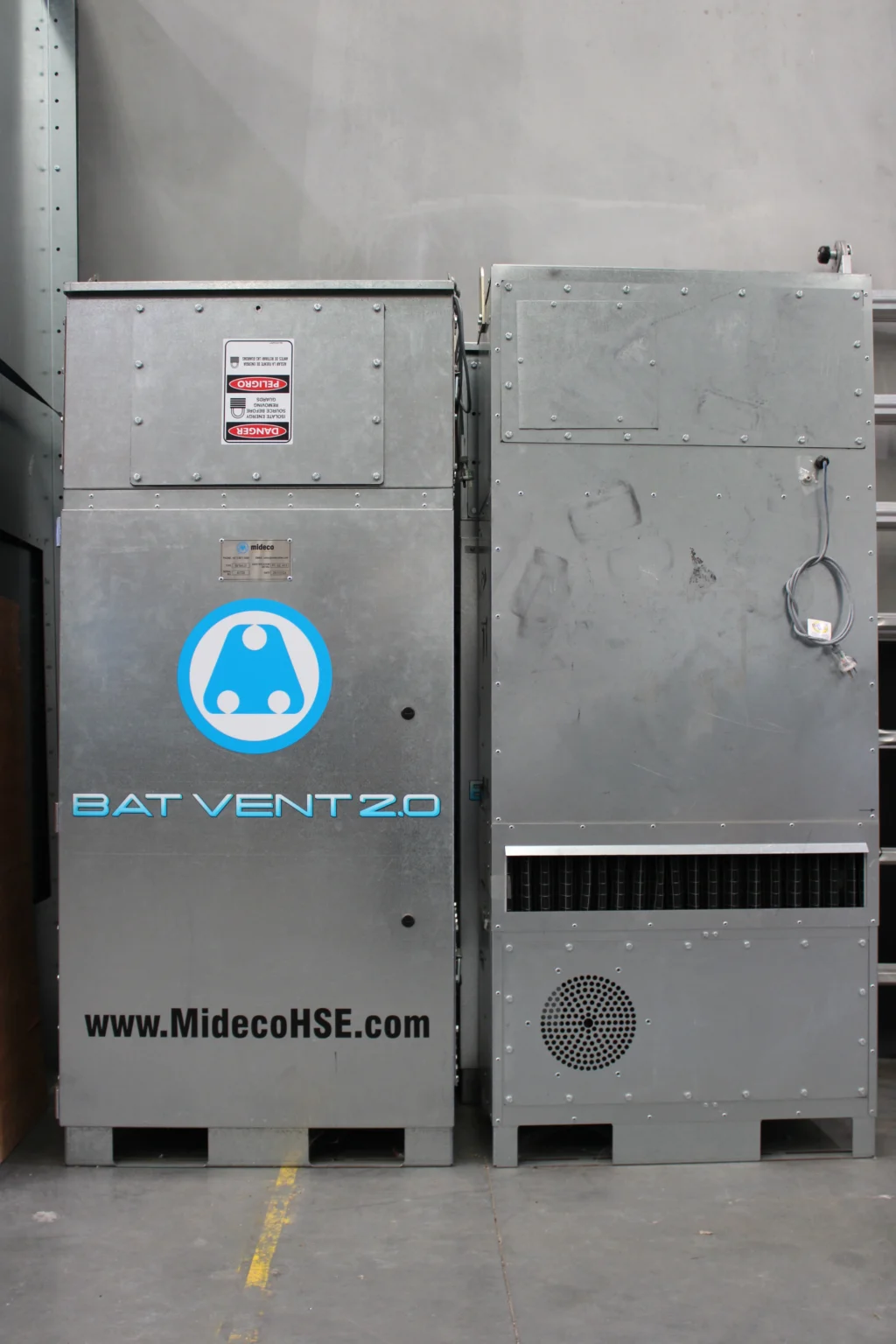
The Bat Vent uses three stages. The coarse pre-filter handles heavy loading and protects the later stages. The fine filter captures respirable fractions, including fine silica. The HEPA filter captures sub-micron particles.
Where H13 HEPA is specified, that is EN 1822, requiring 99.95% efficiency at the most penetrating particle size. US specifiers work in MERV under ASHRAE 52.2. H13 HEPA sits above the MERV scale, which stops at MERV 16. Standard HVAC systems specify MERV 13, which is not adequate for respirable silica control.
| Filter stage | Target | Approximate MERV |
| Pre-filter | Coarse dust, fibers | MERV 8 to 11 |
| Fine Filter | Respirable fractions, fine silica | MERV 13 to 16 |
| HEPA H13 | Sub-micron particles |
HEPA (EN 1822 H13), above the MERV scale
|
The Bat Vent Unit
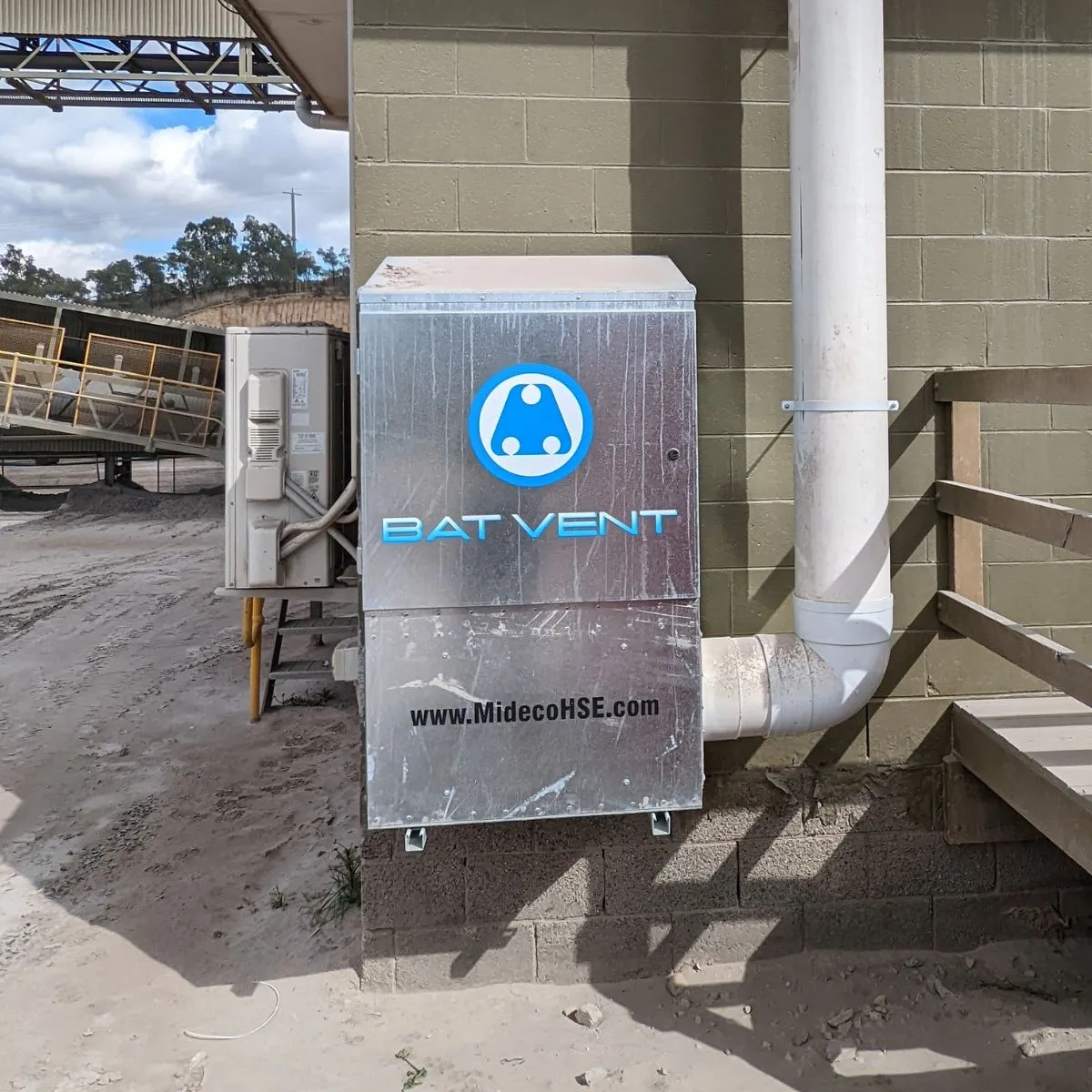
The Bat Vent is Mideco’s positive pressure unit for occupied spaces on mining, quarrying, grain handling, and bulk material sites. It delivers filtered air and maintains positive pressure through staged filtration suited to silica and fine mineral dust environments. Room pressurization monitoring is integrated to verify the pressure differential. The Bat Vent suits continuous operation and can be retrofitted to existing rooms and operator cabins without major structural work.
Pressurization Is One Part of a Clean-Zone Strategy
Room pressurization and operator cabin air filtration keep plant air out through passive pathways. The unit will also filter dust that a worker carries in on clothing, but relying on that is reactive: by the time the unit is filtering it, the hazard is already inside the clean space.
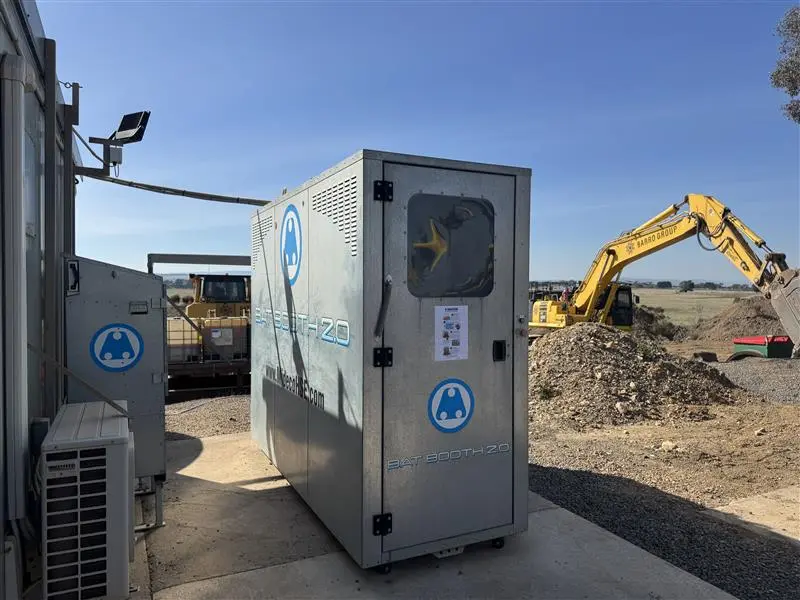
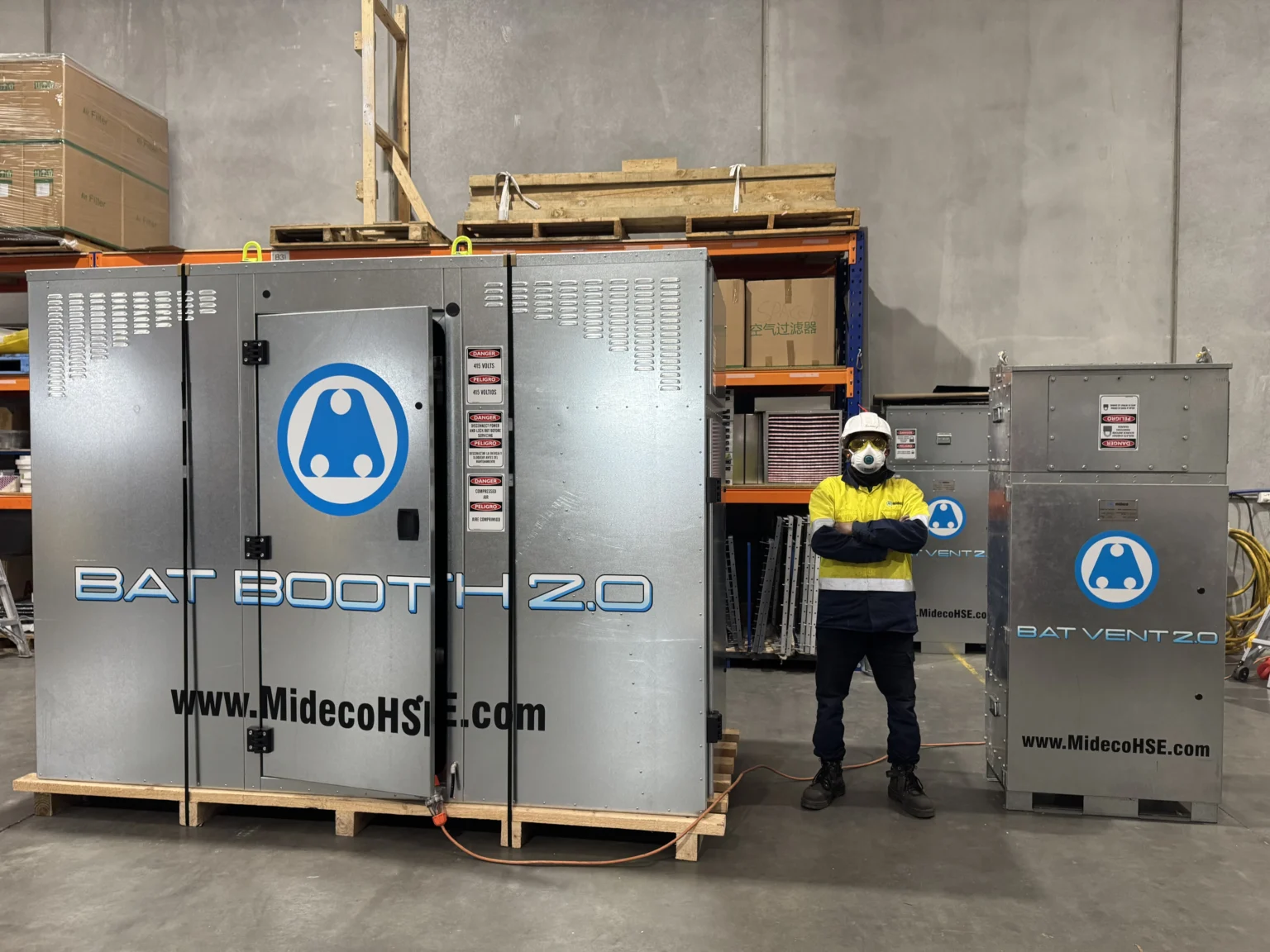
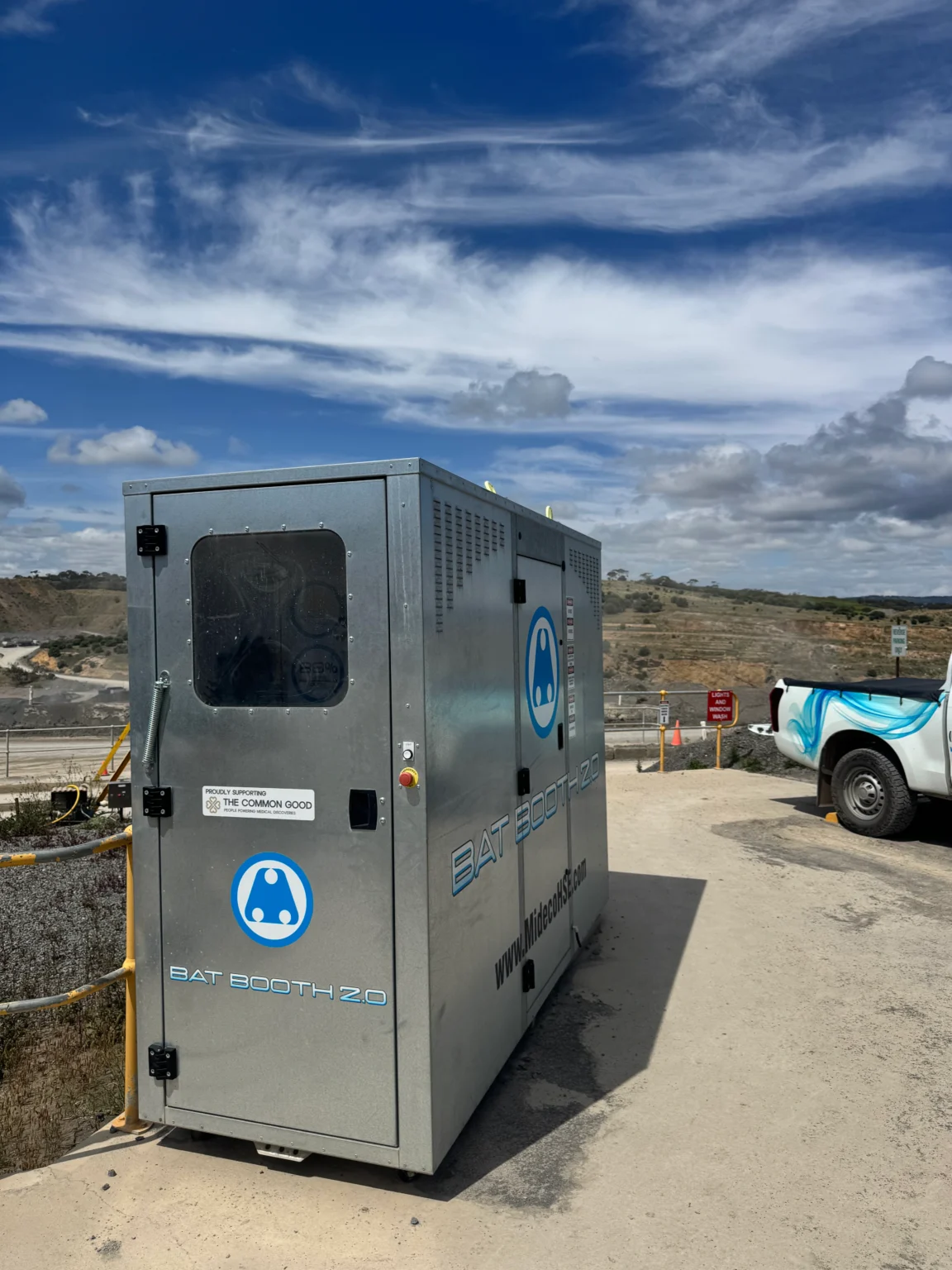
A personnel cleaning station at the threshold addresses that gap. The Bat Booth removes settled dust in a 10-second cycle before the worker enters. A Bat Vent and a Bat Booth at the same threshold address both ingress pathways. The two are not substitutes. The personnel cleaning station is the first layer at the boundary, and room pressurization is the second layer inside the space.
Frequently Asked Questions
A positive pressure unit delivers filtered air into an enclosed space at above-ambient pressure. Any air leaking through gaps flows outward, preventing dust-laden plant air from entering through door frames, cable glands, and construction penetrations.
Optimal positive pressure varies based on room size and door-traffic frequency. The Bat Vent continuously monitors and adjusts to maintain your site’s target pressure. Crucially, the system includes a built-in safety floor. If room pressure drops below the required threshold, it triggers an immediate operator warning so you can address air leaks before dust enters.
An air purifier only recirculates and filters air already inside a room, meaning hazardous dust can still leak in through doors and structural gaps. A positive pressure unit like the Bat Vent draws in clean, HEPA-filtered outside air to create and maintain a continuous outward airflow barrier. This prevents dust from entering in the first place. Room pressurization equipment and air purifiers solve different problems and are not interchangeable in a silica control program.
An air conditioner manages temperature and humidity and typically recirculates room air, so it can move dust around rather than remove it, and it does nothing to stop dust entering. A positive pressure unit like the Bat Vent draws in filtered outside air and holds the room above ambient pressure, so leakage flows outward and untreated air cannot get in. They solve different problems, and one does not replace the other.
Yes. The Bat Vent is designed for fixed structures such as control rooms, site offices, break rooms, and change facilities, and can be wall-mounted with minimal structural modification. The installation review covers room volume, penetrations, and air change requirements to size the unit correctly.
MERV 13 minimum, with EN 1822 H13 (H13 HEPA) for sites with a documented silica exposure control program under OSHA 1910.1053. Standard HVAC-grade filters do not provide adequate protection in silica-generating environments.

Take the lead in workplace safety.
Request a quote for our advanced dust management solutions, including industry-leading dust extraction and dust collection systems.
Contact Mideco for a system that’s tailored to your facility’s operational and compliance requirements.
"*" indicates required fields

Mideco Jia Pty Ltd
Global leader in Dust Management Solutions since 1950. Supporting North American grain operations with industry-standard technology for over 40 years.Helper Links
Trusted by Industry Leaders
















Copyright 2026 © Mideco
