

Bat Vent®
Dust Filtration System
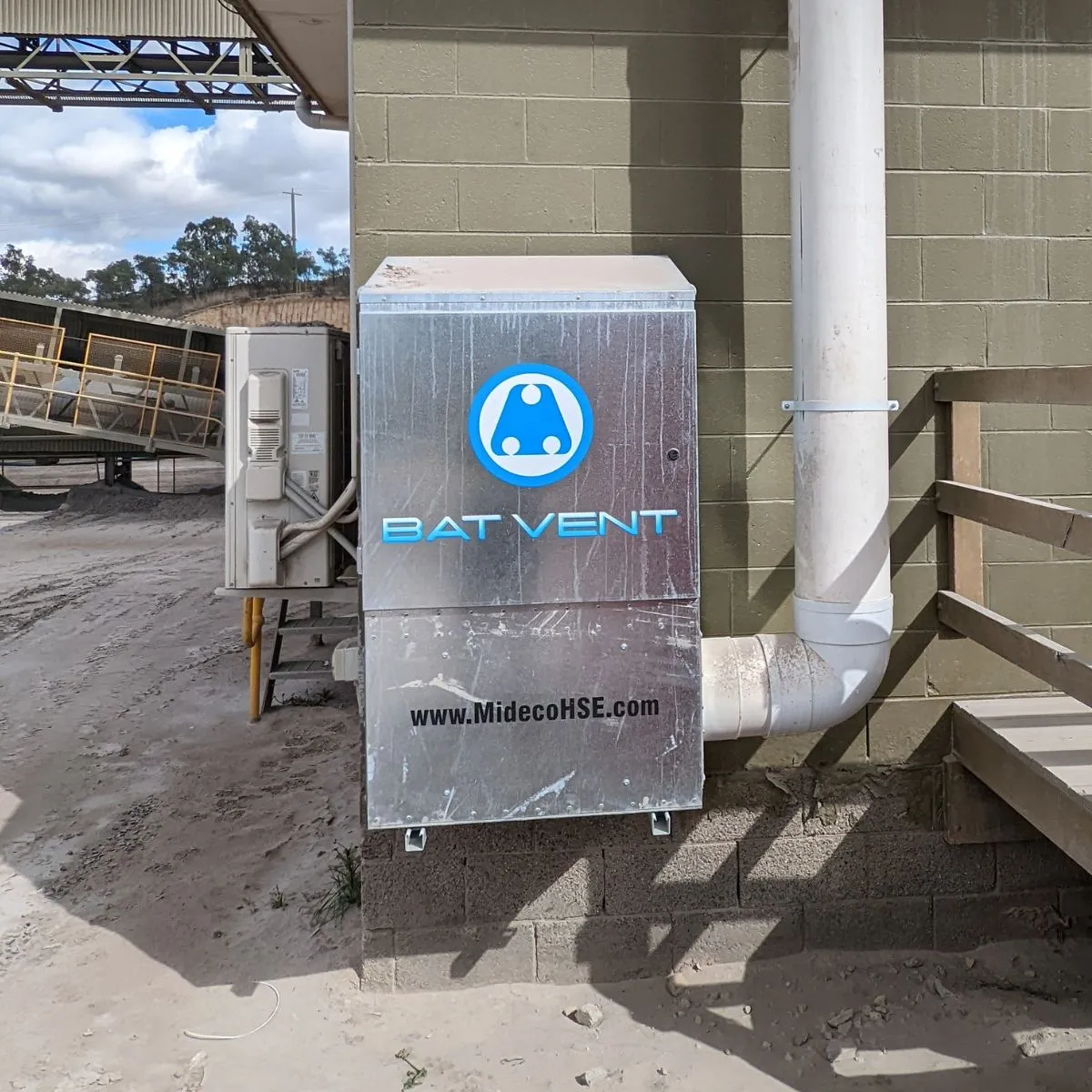
The Bat Vent is a high-efficiency dust filtration system engineered to protect control rooms, site offices, operator cabins and enclosed workspaces. Advanced air filtration is combined with controlled positive pressurization. The result is a system that protects indoor spaces and maintains safe, breathable air for personnel for US workers.
Request a quote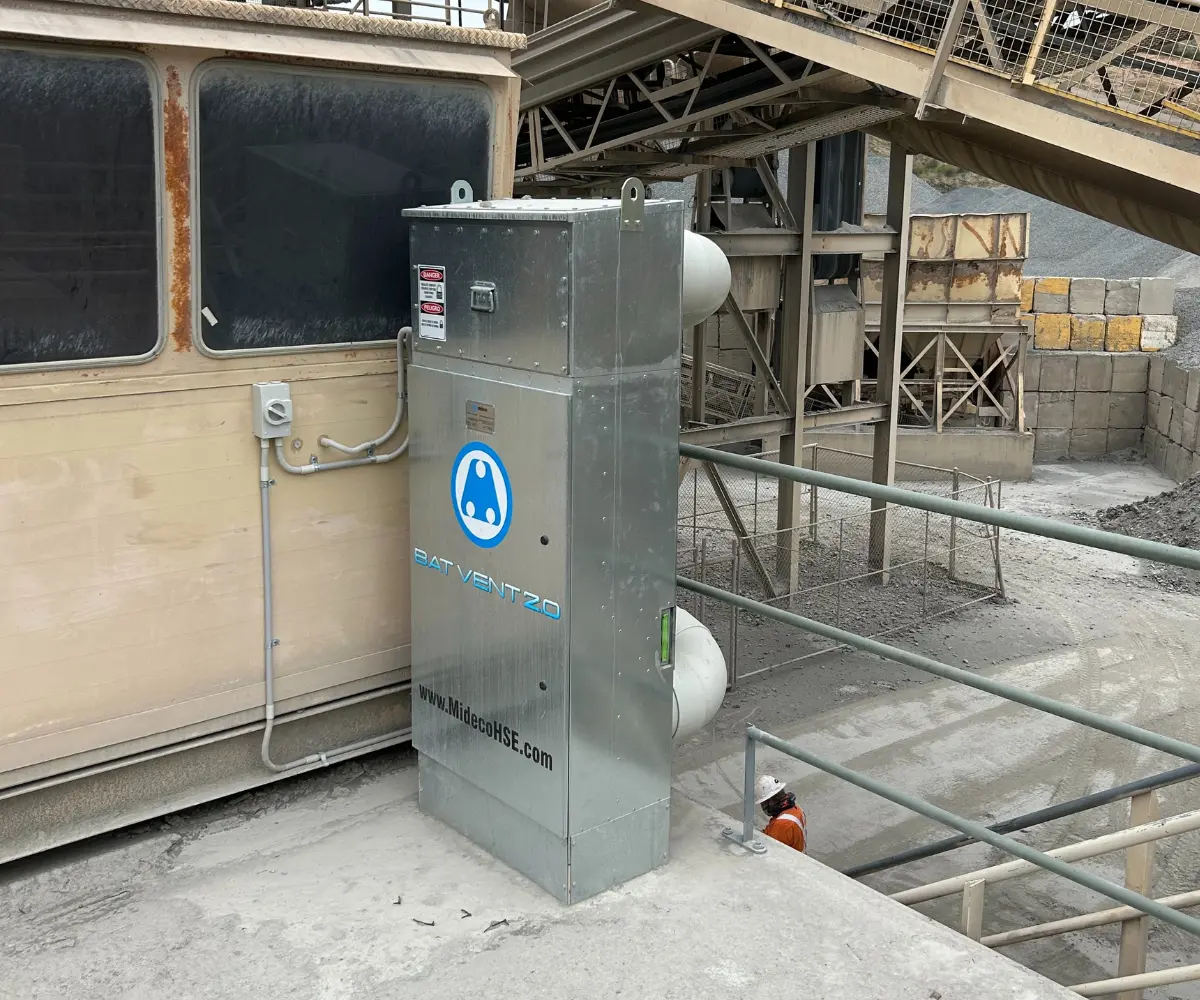
Securing Indoor Air Quality
Industrial dust can easily infiltrate site offices, control rooms, and breakrooms, turning supposedly safe spaces into hidden health hazards. For managers, maintaining a truly clean environment for administrative and technical staff is a critical part of a comprehensive safety strategy.
Mideco solves this with the Bat Vent. This high-efficiency dust filtration system is engineered to purify air before it enters on-site spaces, ensuring that indoor staff are just as protected as those on the front lines.
Designed to support compliance with NIOSH RI 9701 and international safety standards, the Bat Vent works in tandem with our Bat Booth® to provide a complete, facility-wide defense against hazardous dust.
What Is an Industrial Dust Filtration System?
An industrial dust filtration system removes airborne particulates from enclosed environments, as well as creating a positive pressure barrier to prevent contaminated outside air from entering. The system filters incoming air before it enters operator cabins, control rooms and site offices. This ensures respirable dust such as silica and mineral particles remain outside the protected space.
Dust suppression and dust collection systems control dust in open environments or capture airborne particles within process areas. Instead, dust filtration systems focus specifically on indoor protection. Clean, breathable air is maintained and workplace exposure limits are supported to form a critical part of modern dust management strategies.


How the Bat Vent works
The Bat Vent ensures workplace safety by using a three-stage filtration system to create a clean zone of purified air and positive pressure. This acts as a powerful shield that continuously pushes dust out and prevents outside contaminants from leaking back into your workspace.
A significant risk in the US industrial sector involves employees who are not directly on the tools but work in proximity to dust-generating operations. In many cases, staff in administrative buildings or onsite accommodations are unaware that they are being indirectly exposed to respirable silica or mineral dust.
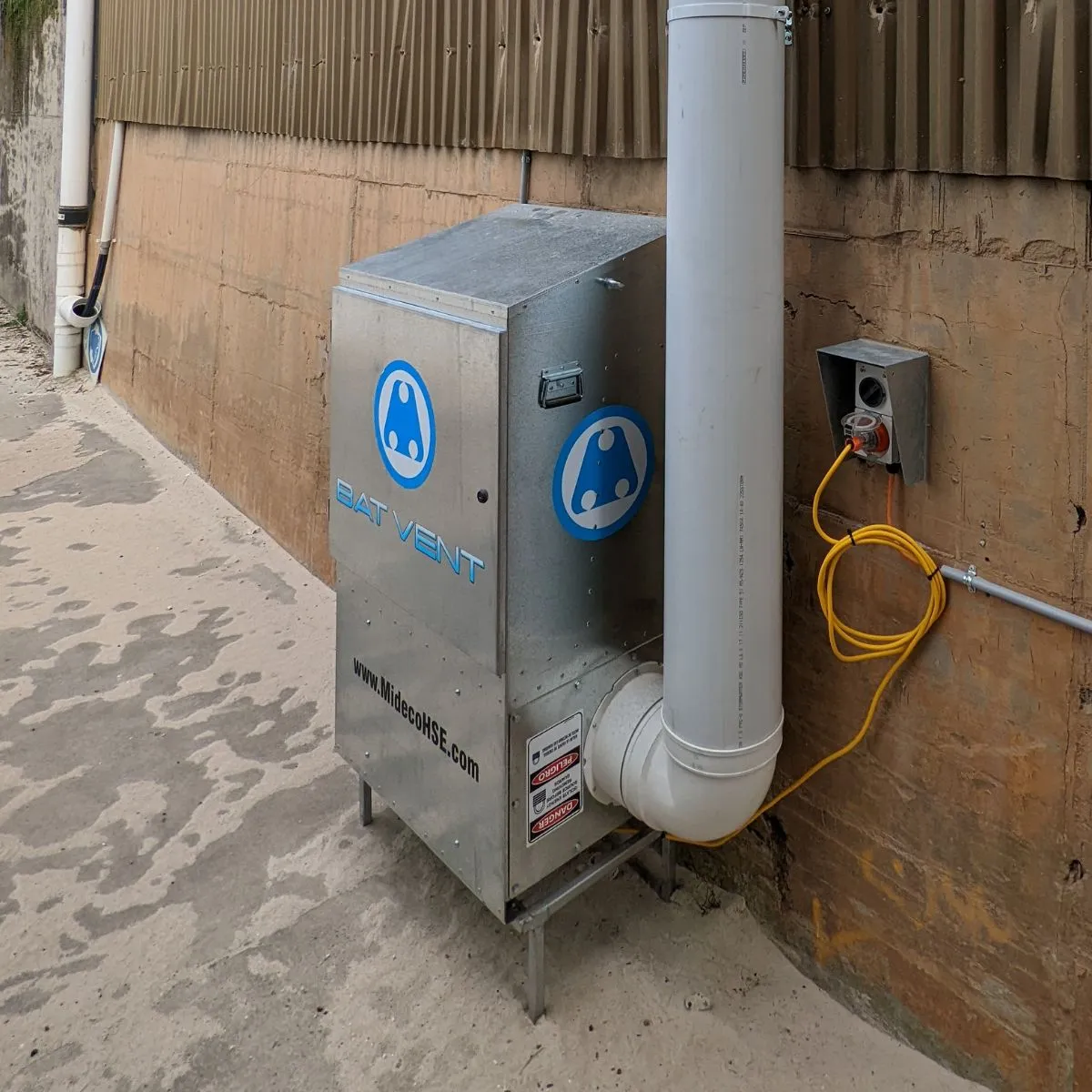
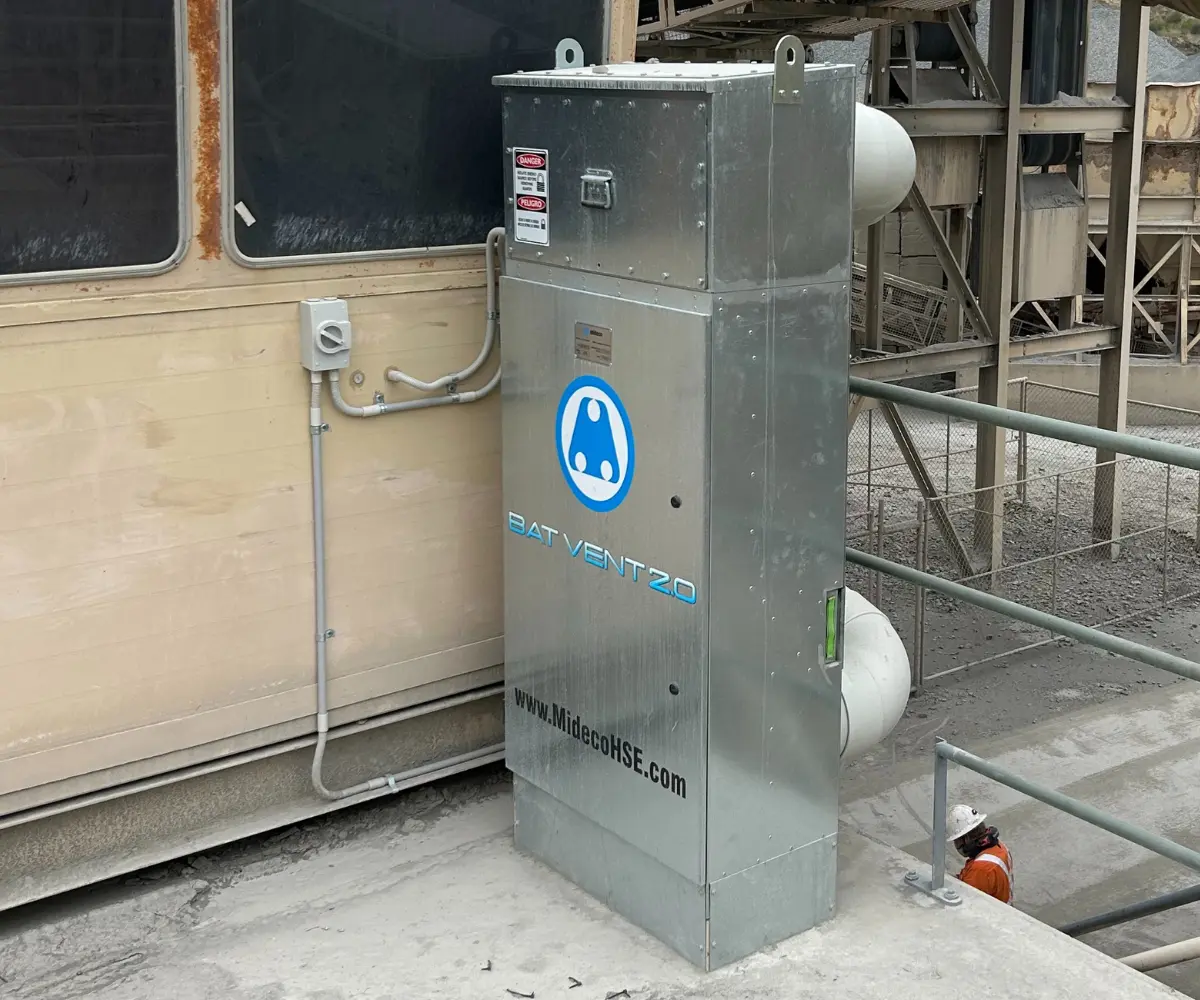
Redesigned with a sleek, self-contained body for faster installation, the Bat Vent dust filtration systems is the ideal solution for both new builds and retrofitting existing structures.
The Right Environment for Industrial Dust Filtration
The Bat Vent dust filtration systems is deployed across US industries where indoor air protection is critical:
- Mining and quarrying control rooms
- Cement plant offices and processing cabins
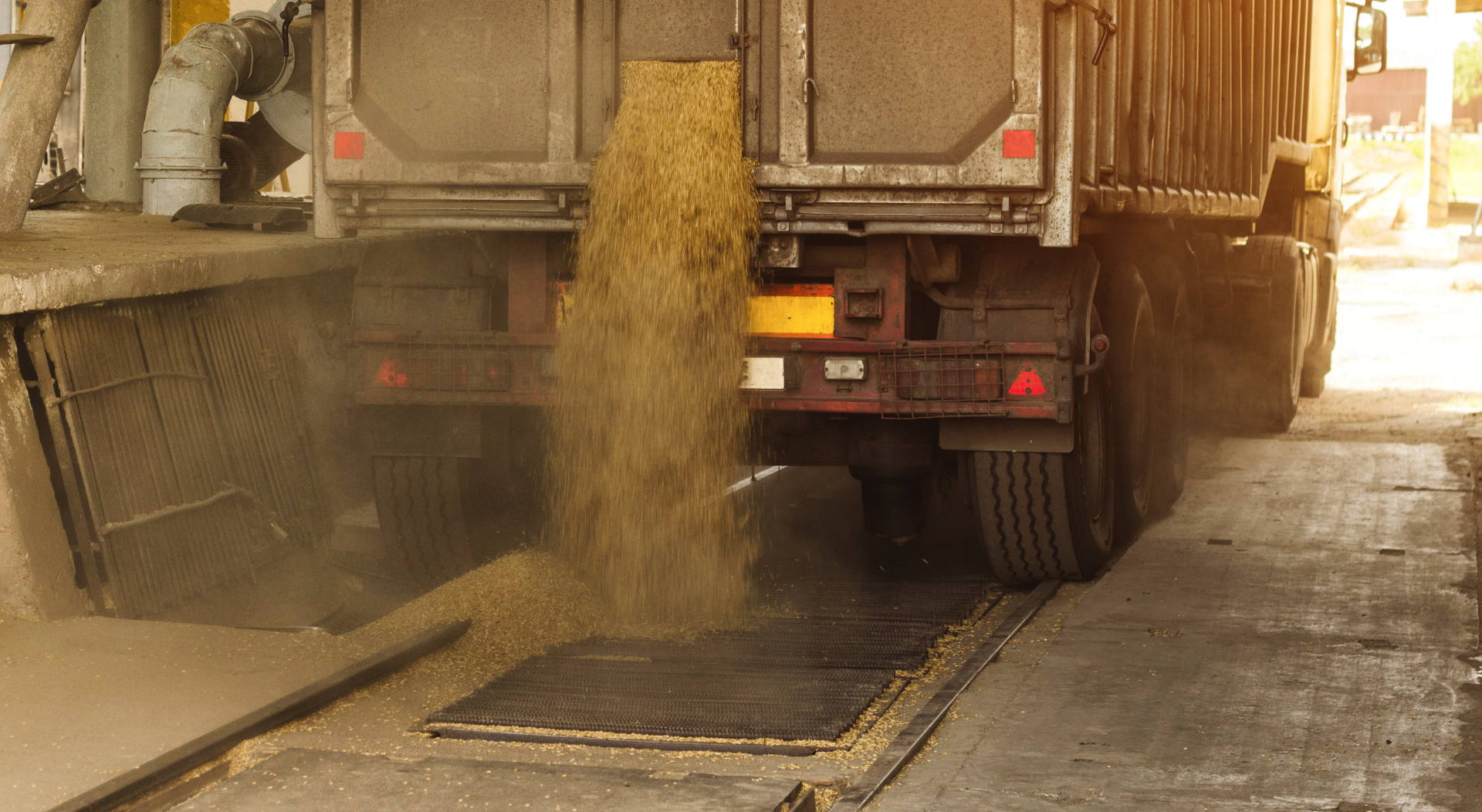
- Grain handling site offices
- Bulk material processing facilities
- Construction site enclosures
- Industrial manufacturing environments
- Portable operator cabins and modular buildings
Any workspace located near high-dust operations benefits from filtered and pressurized indoor air.

Designed for OSHA & NIOSH Indoor Air Protection
The Bat Vent supports OSHA respirable silica standards and supports facilities in reducing indirect airborne dust exposure in enclosed workspaces. It aligns with NIOSH guidance for indoor air protection and strengthens control room air quality management programs.
As a preventative engineering control, the Bat Vent works with positive pressure to keep hazardous dust outside the enclosure. It complements open-area dust suppression systems such as the Burnley Baffles and personnel dedusting solutions like the Bat Booth. Combining systems forms part of a broader integrated dust control system.
Deploying the Bat Vent Dust Filtration System
- Multi-stage industrial-grade filtration
- Positive pressure barrier to prevent dust infiltration
- Maintains clean, breathable indoor air
- Protects administrative and operational staff
- Supports workplace exposure compliance strategies
- Durable, self-contained industrial design
- Suitable for retrofit or new installations

Frequently Asked Questions
A dust filtration system removes airborne particulates from enclosed spaces and prevents contaminated outside air from entering. Multi-stage filtration is combined with positive pressurization to maintain clean indoor air in control rooms, site offices and operator cabins.
A positive pressure system introduces filtered air into an enclosure at a slightly higher pressure than the surrounding environment. This pressure difference prevents dust-laden air from leaking into the space, maintaining a clean and protected indoor environment.
Yes. The Bat Vent is designed to filter fine respirable particles, including silica dust, before air enters the enclosure. By maintaining filtered air and positive pressure, it helps reduce indirect silica exposure for indoor personnel.
Yes. The Bat Vent is designed for installation in permanent structures, portable operator cabins, and modular site offices. Its self-contained design supports both new construction and retrofit applications.
OSHA does not certify specific products, although maintaining filtered and pressurized indoor air helps facilities manage respirable dust exposure in accordance with OSHA standards. The Bat Vent supports exposure control strategies within broader workplace safety programs.
Take the lead in workplace safety.
Fill in the form for a quote or consultation on OSHA-compliant dust management solutions for your facility.
"*" indicates required fields

Mideco Jia Pty Ltd
Global leader in Dust Management Solutions since 1950. Supporting North American grain operations with industry-standard technology for over 40 years.
Trusted by Industry Leaders










All logos are the property of their respective owners. Their appearance does not imply a direct endorsement, but identifies facilities where our products are currently or has previously been installed.
Copyright 2026 © Mideco
