

The Dangers of Compressed Air: Blow-Down, Injuries and the OSHA 30 psi Rule
Compressed air is the most common way workers clean dust off their clothing and equipment on an industrial site. It is also one of the least understood hazards on that same site. Most facilities treat blow-down as routine housekeeping rather than as the safety hazard the standards actually consider it to be.
Here, we’ll unpack the dangers of compressed air and the role of the OSHA compressed air standard, giving your facility the information it needs to maintain safe standards and protect your workforce.
Request a quote
What Are the Dangers of Compressed Air?
Compressed air injuries and exposure risks can occur through four key hazard pathways. These represent a grouping of the main risks associated with compressed air use, including those identified across OSHA requirements and NIOSH guidance relating to compressed air, personal protective equipment, and respirable dust exposure.
Air Embolism
Air embolism occurs when compressed air enters the body through broken or punctured skin, or through a body opening, and reaches the bloodstream. Even routine compressed air practices can create serious risks if air is directed towards the body.
Can Compressed Air Kill You
Yes, compressed air can be fatal in certain circumstances. The primary mechanism is air embolism, which occurs when compressed air enters the body through broken or punctured skin and reaches the bloodstream.
The risk does not require extremely high pressure. Air from common shop lines can force its way through a skin barrier breach, such as a cut or open wound. If air enters a blood vessel, it can travel through the body and create an embolism. Depending on where it reaches, this can cause life-threatening outcomes, including stroke or cardiac arrest.
This is why compressed air should never be directed at the body or used for personal cleaning, regardless of the pressure setting.
What OSHA 1910.242(b) Actually Says About Compressed Air for Cleaning
OSHA 29 CFR 1910.242(b) states: “Compressed air shall not be used for cleaning purposes except where reduced to less than 30 p.s.i. and then only with effective chip guarding and personal protective equipment.” The standard sets a ceiling, not a green light.
Three key requirements apply when using compressed air for cleaning:
- OSHA interprets the 30 psi limit as dead-end pressure, meaning the pressure measured at the nozzle when the opening is blocked, rather than the line pressure at the compressor.
- Effective chip guarding must be fitted to prevent particles and debris from being blown back towards the operator.
- Personal protective equipment, including eye and hearing protection, is required when compressed air is used for cleaning, including at pressures of 30 psi or below.
Reducing pressure to 30 psi makes the practice permissible under the standard. It does not make it safe, and it does not make it effective at actually removing dust from a worker’s clothing.
Compressed Air Doesn’t Remove Dust, It Re-Disperses It
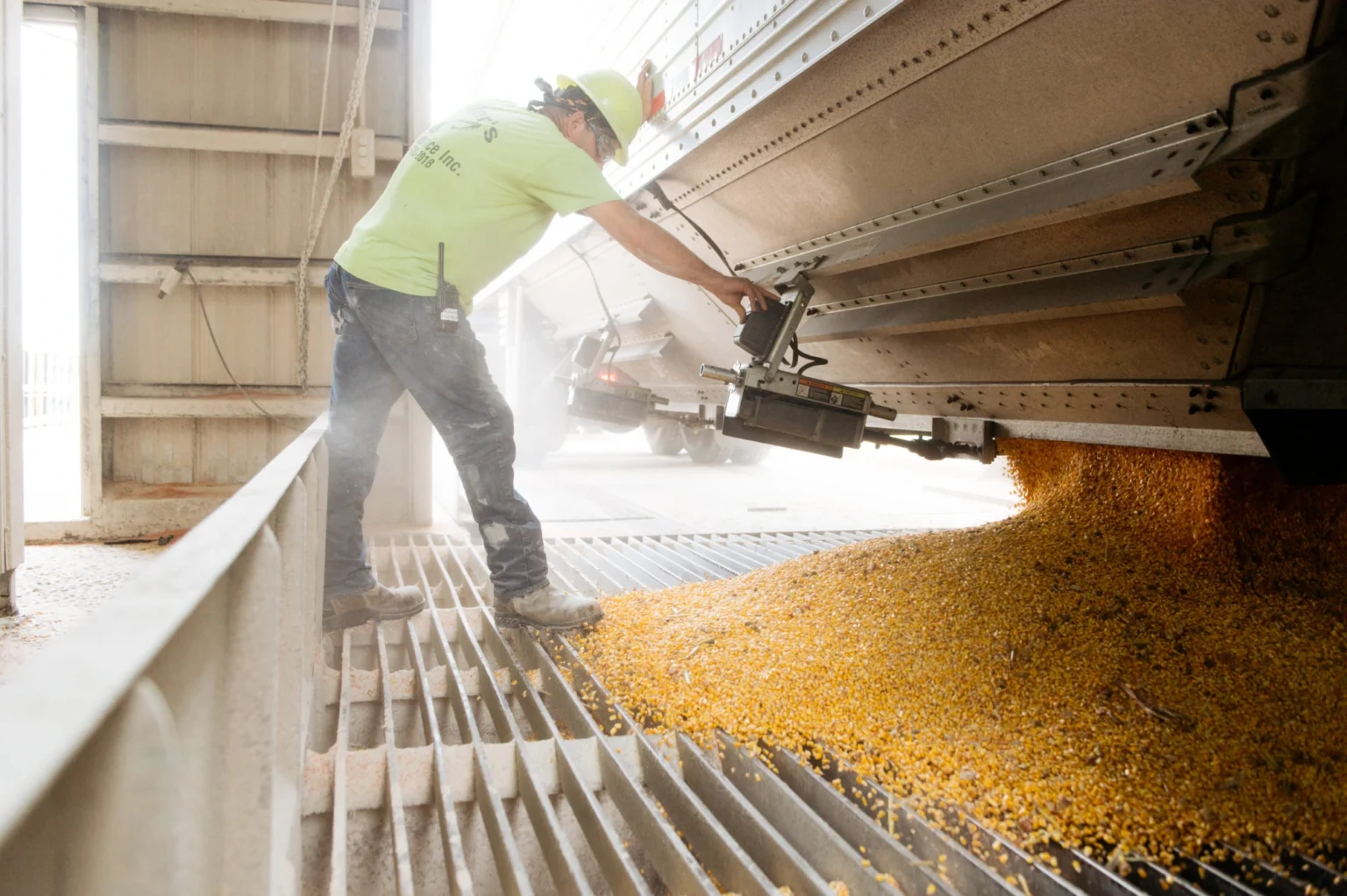
Blowing dust off a uniform won’t remove dust from the workplace, it re-disperses it. The moment compressed air hits a dust-covered surface, fine respirable particles lift into the breathing zone of the worker doing the cleaning and everyone standing nearby, then settle again across floors, walkways and equipment once the air disperses.
That resettled dust becomes two separate problems. First, it adds to the cleaning and maintenance load across the facility. Second, in grain, coal and metal dust environments, resettled fine particulate is a combustible dust hazard, capable of forming an explosive cloud if it becomes airborne again in the right concentration. Dust that lands on clothing rather than being captured also travels beyond the work area entirely, into site vehicles, break rooms and, eventually, a worker’s own car and home.
What the Standards Expect Instead: The Hierarchy of Controls
Occupational safety standards use the hierarchy of controls to determine the most effective ways to manage workplace hazards. Rather than relying on PPE as the first response, the hierarchy prioritises removing or reducing the hazard at its source.
The five levels are:
- Elimination: Removing the hazard entirely from the workplace or process.
- Substitution: Replacing the hazardous process, material, or equipment with a safer alternative.
- Engineering controls: Changing equipment, systems, or processes to isolate workers from the hazard or reduce exposure at the source.
- Administrative controls: Using procedures, training, scheduling, and workplace rules to reduce the likelihood of exposure.
- Personal protective equipment (PPE): Providing workers with protective equipment to reduce exposure when other controls cannot fully eliminate the risk.
Where elimination or substitution is not possible, engineering controls are generally preferred because they address the hazard before it reaches the worker. PPE remains an important safeguard, but it is positioned lower in the hierarchy because it relies on consistent and correct use by individuals.
Understanding Engineering Control
Blow-down with a hand-held air line, even when it meets the 30 psi requirement, relies primarily on administrative controls and personal protective equipment to manage a hazard that remains present. The worker must still follow procedures correctly and use PPE consistently to reduce exposure.
Engineering controls take a different approach by changing the physical work environment or process to reduce the hazard at its source. Rather than relying solely on worker behavior, engineering controls are designed to provide a more consistent level of protection through physical systems and equipment.

Key characteristics of engineering controls include:
- Source-level mitigation: Capturing, containing, or removing the hazard at its point of generation before it reaches the worker or surrounding environment.
- Passive and behavioral independence: Operating without requiring constant worker decision-making, supervision, or compliance to maintain protection.
- Physical and environmental alteration: Using equipment, barriers, or process changes to control exposure.
- Consistent protection: Providing a baseline level of control even when normal workplace variables or human error occur.
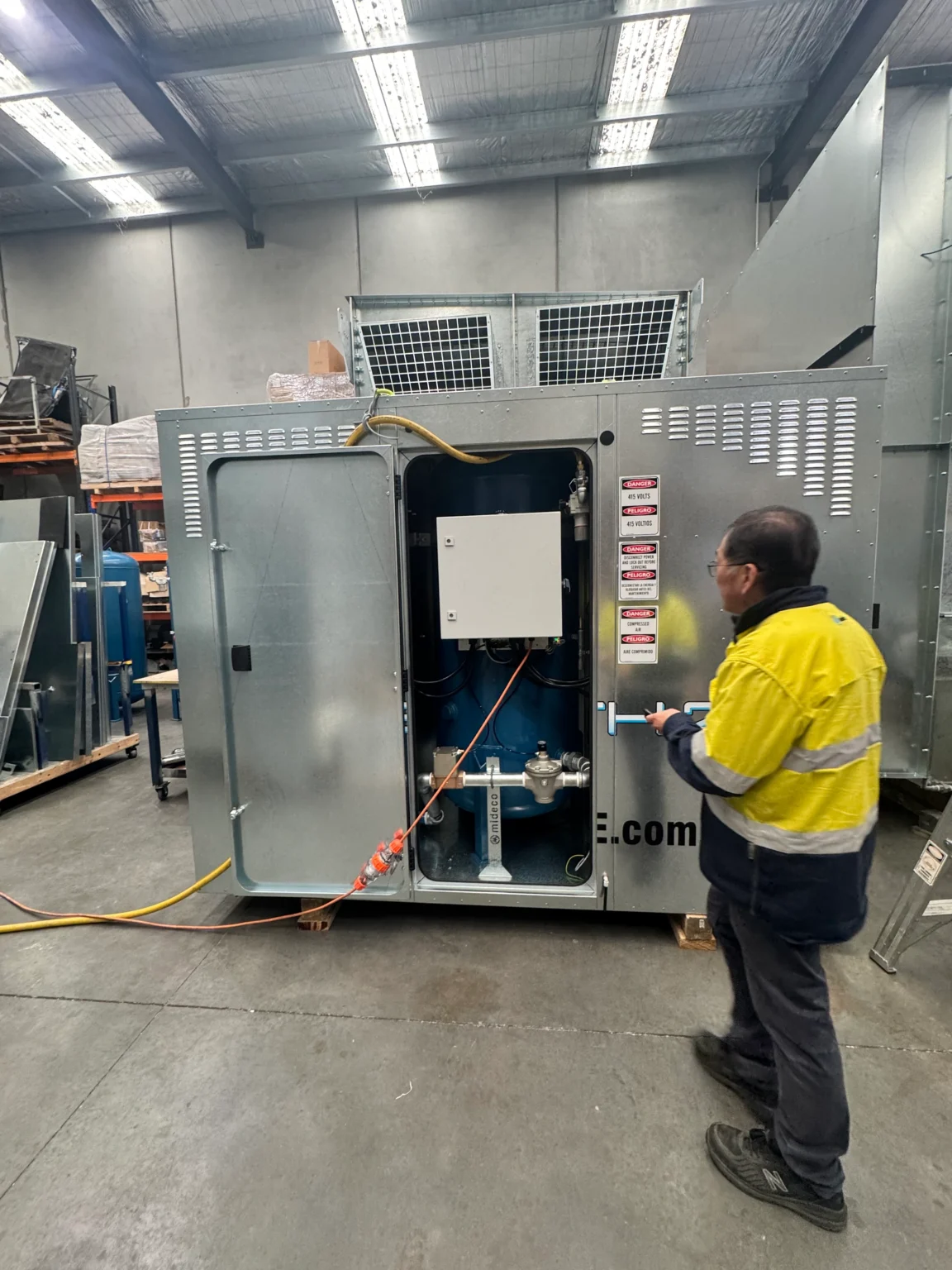
For compressed air dust removal, enclosed systems such as personnel cleaning booths and filtered, pressurized rooms apply these engineering control principles. A Bat Booth removes dust from workers before they leave a contaminated area, while Bat Vent protects enclosed spaces by filtering incoming air and maintaining positive pressure to prevent dust ingress. Together, these systems address both dust carried on personnel and airborne contamination entering clean work areas.
Alternatives to Compressed Air Cleaning
Four methods are commonly used to clean dust from people, clothing and equipment on an industrial site, each with a different compliance position and best-fit use case.
| Method | How it works | What happens to the dust | Compliance position | Best fit |
| Compressed air line | Hand-held nozzle directs a jet of air at clothing or equipment | Becomes airborne, then resettles across the facility | Non-compliant above 30 psi dead-end pressure; requires chip guarding and PPE even below it | Not recommended for cleaning a person |
| Low-pressure safety nozzle | Fitted nozzle reduces dead-end pressure to meet the 30 psi limit | Still becomes airborne and resettles, just at lower velocity | Meets 1910.242(b) when used with chip guarding and PPE | Equipment blow-down, not personal cleaning |
| Industrial vacuum | Suction draws dust and debris directly into a filtered collection unit | Captured at the point of removal, not redistributed | No dead-end pressure risk; PPE still recommended | Spot cleaning of surfaces and confined areas |
| Enclosed walk-through cleaning booth | Timed air cycle inside a sealed enclosure lifts dust from clothing, with particles captured and filtered within the system | Contained and filtered within the booth, preventing dust from being redistributed into the workplace | Removes the compressed air line hazard from the point of use by replacing open blow-down with an enclosed engineering control | Personnel cleaning at the transition between dusty and clean zones |
| Room pressurization and filtration system | Filtered air is continuously supplied into enclosed spaces while positive pressure prevents contaminated outside air from entering | Captured via 3-stage filtration on intake; recirculated through 2-stage filtration if room pressure drops | Functions as an engineering control by providing automatic, consistent protection without relying on continuous worker action or compliance | Control rooms, offices, cabins, and other enclosed areas located near high-dust environments |
Enclosed Personnel Cleaning as an Engineering Control
An enclosed personnel cleaning booth acts as an engineering control by containing dust already carried on personnel at the transition between dusty and clean areas. Rather than relying only on PPE or manual cleaning practices, the worker enters the booth where a controlled air cycle removes dust from clothing and captures it within the system. This helps prevent contaminated dust from being carried into vehicles, offices, break areas, and other clean environments.
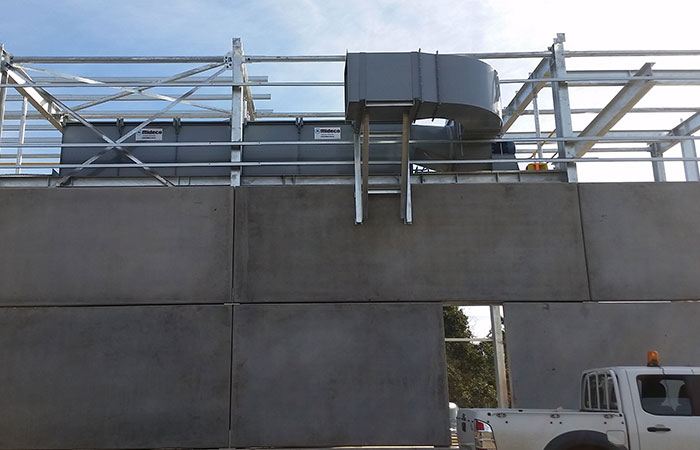
That released dust is captured and filtered inside the sealed enclosure instead of being dispersed into the surrounding work area, and there is no hand-held compressed air line at the point of use at any point in the cycle. Mideco’s Bat Booth is one such system, purpose-built as a solution for the transition point between high-dust work areas and clean zones such as break rooms, offices and vehicle staging areas.
Effectiveness of Clothes Cleaning Technology
The NIOSH Dust Control Handbook compares three ways of cleaning dust from work clothing: vacuuming, a hand-held air hose and a clothes cleaning booth. The booth left the least dust on coveralls and was the fastest by a wide margin, while the air hose left the most dust of the three methods.
On 100% cotton coveralls, the booth left 42.3 g of dust in 17 seconds, compared with 63.1 g in 398 seconds for vacuuming and 68.8 g in 183 seconds for an air hose. On polyester/cotton blend coveralls, it left 21.9 g, less than half the dust left by either alternative.
| Cleaning method | 100% cotton: dust remaining (g) | 100% cotton: cleaning time (seconds) | Polyester/cotton blend: dust remaining (g) | Polyester/cotton blend: cleaning time (seconds) |
| Vacuuming | 63.1 | 398 | 45.5 | 346 |
| Air hose | 68.8 | 183 | 48.4 | 173 |
| Clothes cleaning booth | 42.3 | 17 | 21.9 | 18 |
Source: NIOSH, Dust Control Handbook for Industrial Minerals Mining and Processing, Second Edition (2019-124), Table 9.1.
Bat Booth and Bat Vent Engineering Controls
Because the air cycle is enclosed and automated, the worker does not need to operate a nozzle or manually adjust pressure. For facilities still relying on hand-held blow-down, moving personnel cleaning into an enclosed engineering control provides a more controlled approach.
The Bat Booth acts as a secondary containment and isolation control by intercepting dust already carried on personnel at the transition between dusty and clean areas. The NIOSH Dust Control Handbook for Industrial Minerals Mining and Processing (2019-124) documents the use of personnel cleaning booths as an engineering control for managing dust on workers.
The Bat Vent addresses a different exposure pathway by preventing contaminated air from entering protected indoor spaces. Through filtered incoming air and positive pressure, it helps maintain cleaner environments in enclosed areas located near dust-generating operations.
Frequently Asked Questions
Yes. Compressed air can cause air embolism, eye and hearing injury, and respiratory exposure from resuspended dust, even when used exactly as intended for blow-down cleaning.
OSHA 29 CFR 1910.242(b) limits compressed air used for cleaning to a dead-end pressure of less than 30 psi, and requires effective chip guarding and personal protective equipment whenever it is used. The limit applies to the pressure at the nozzle when the opening is blocked, not the line pressure at the source.
Compressed air can be used on clothing only if pressure is reduced below 30 psi dead-end, with chip guarding and PPE in place, which makes the practice permissible rather than safe. It does not remove dust from the workplace, since the resuspended particles resettle elsewhere and the worker still breathes them in during the process.
Air forced under the skin can enter the bloodstream through a cut, wound or break in the skin’s surface, causing an air embolism. Depending on where the resulting air bubble travels, the outcome can include stroke, cardiac arrest or death.
No. Reducing pressure to below 30 psi dead-end makes blow-down permissible under OSHA 1910.242(b), not safe or effective. Dust is still resuspended into the breathing zone and resettles across the facility rather than being removed.
Reviewing Your Blow-Down Practices?
If your facility is reviewing its current compressed air cleaning practices, Mideco can assess your site and implement practical options for safer personnel dust removal.
Request a quote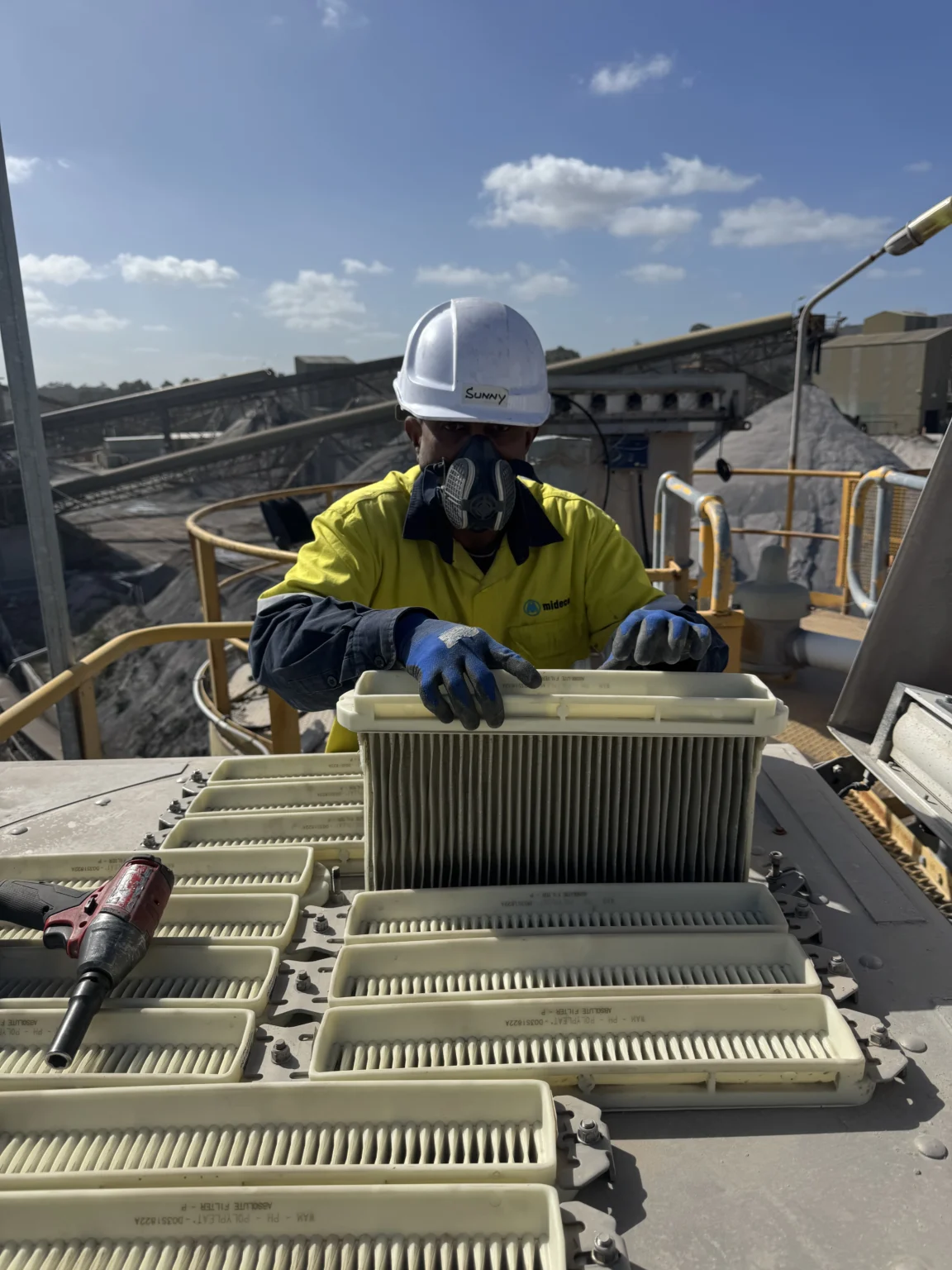
"Mideco provided effective routine servicing of our smelter Bat Booths, keeping the equipment operational and enabling personnel to safely utilise them for dust management. They are also very flexible with servicing coordination and always easy to contact."
Jake Dalla Valle
Asset Management Planner, BHP Olympic Dam
“The Bat Booth is actually unreal. We have got night shift workers, and it’s a lot faster and more efficient to use. Instead of relying on a simple handgun, this equipment really gets the job done quickly and effectively.”
Alex Stevenson
Leading Hand, Hanson Wolffdene Quarry

“The Bat Booth is very good. The maintenance guys use it the most because they get covered in dust and dirt during their work. It makes a huge difference in keeping them clean and comfortable. They really appreciate how effective it is for that purpose.”
John Taylor
Quarry Manager, Hanson Ferny Grove Quarry
“Bat Booth has been a great installation here at Glasshouse. It's allowed our guys at the end of the day, after they've done their maintenance and before they jump into their vehicles and head home to their families, to lock out of the MCC room and come into the Bat Booth and be de-dusted... to make sure that we're not increasing their exposure of respirable dust.”
Chris Wilson
Quarry Manager, Hanson Glasshouse Quarry
“We have used the Burnley Baffles successfully on several projects.”
Senior Project Manager, AMG, Inc.

Take the lead in workplace safety.
Request a quote for our advanced dust management solutions, including industry-leading dust extraction and dust collection systems.
Contact Mideco for a system that’s tailored to your facility’s operational and compliance requirements.
"*" indicates required fields

Mideco Jia Pty Ltd
Global leader in Dust Management Solutions since 1950. Supporting North American grain operations with industry-standard technology for over 40 years.
Trusted by Industry Leaders







All logos are the property of their respective owners. Their appearance does not imply a direct endorsement, but identifies facilities where our products are currently or has previously been installed.
Copyright 2026 © Mideco
