

Industrial Dust Control Applications
Effective dust control applications start with two questions: where is the dust generated, and who is exposed to it? Dust control is not one system but a set of engineered responses to those questions. Mideco’s dust control applications cover three situations common to mining, quarrying, grain handling and bulk material handling: fugitive dust at receiving pits, dust carried out on workers’ clothing, and contaminated air inside occupied rooms.
Request a quote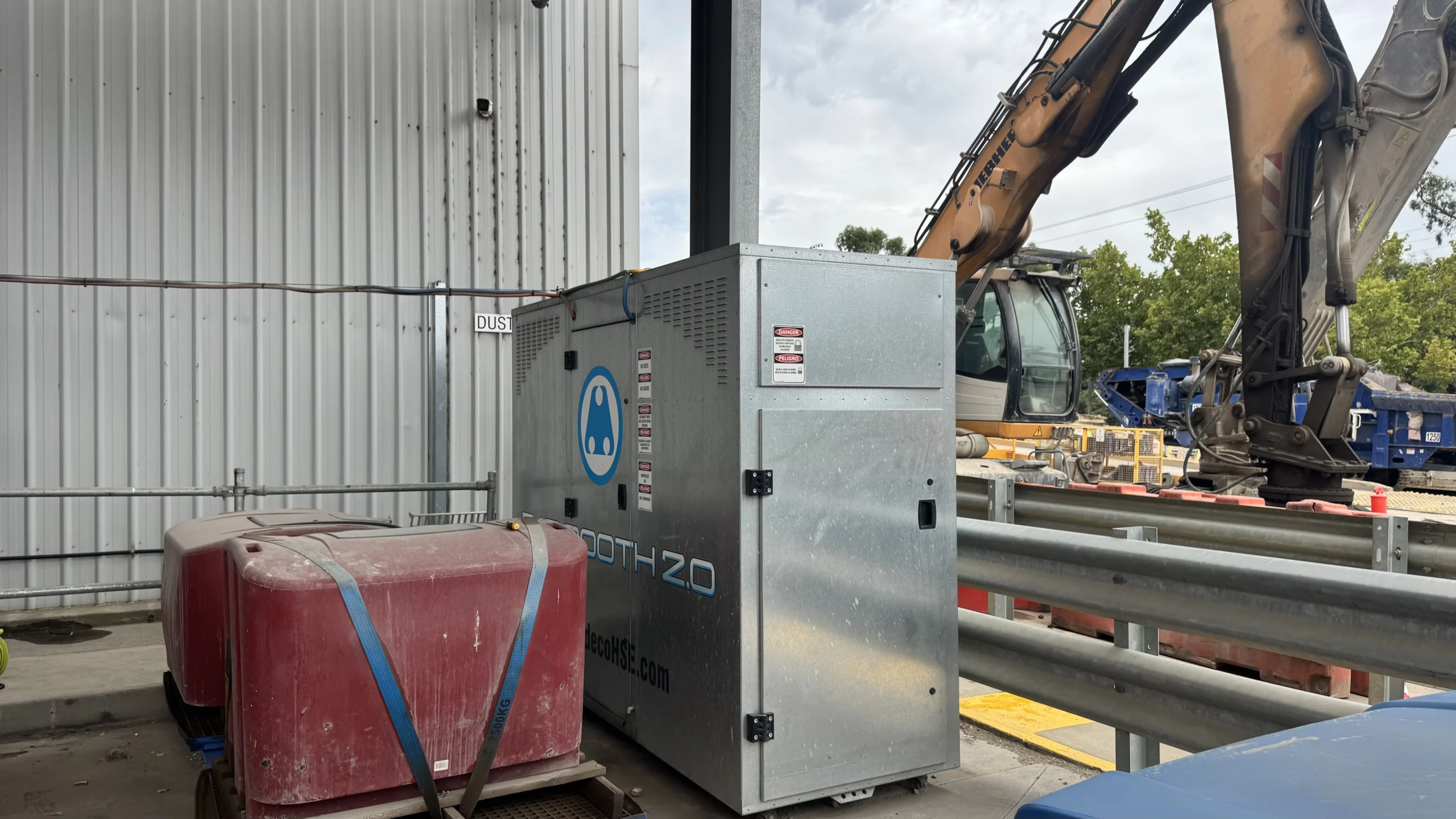
Fugitive Dust at Receiving Pits and Transfer Points
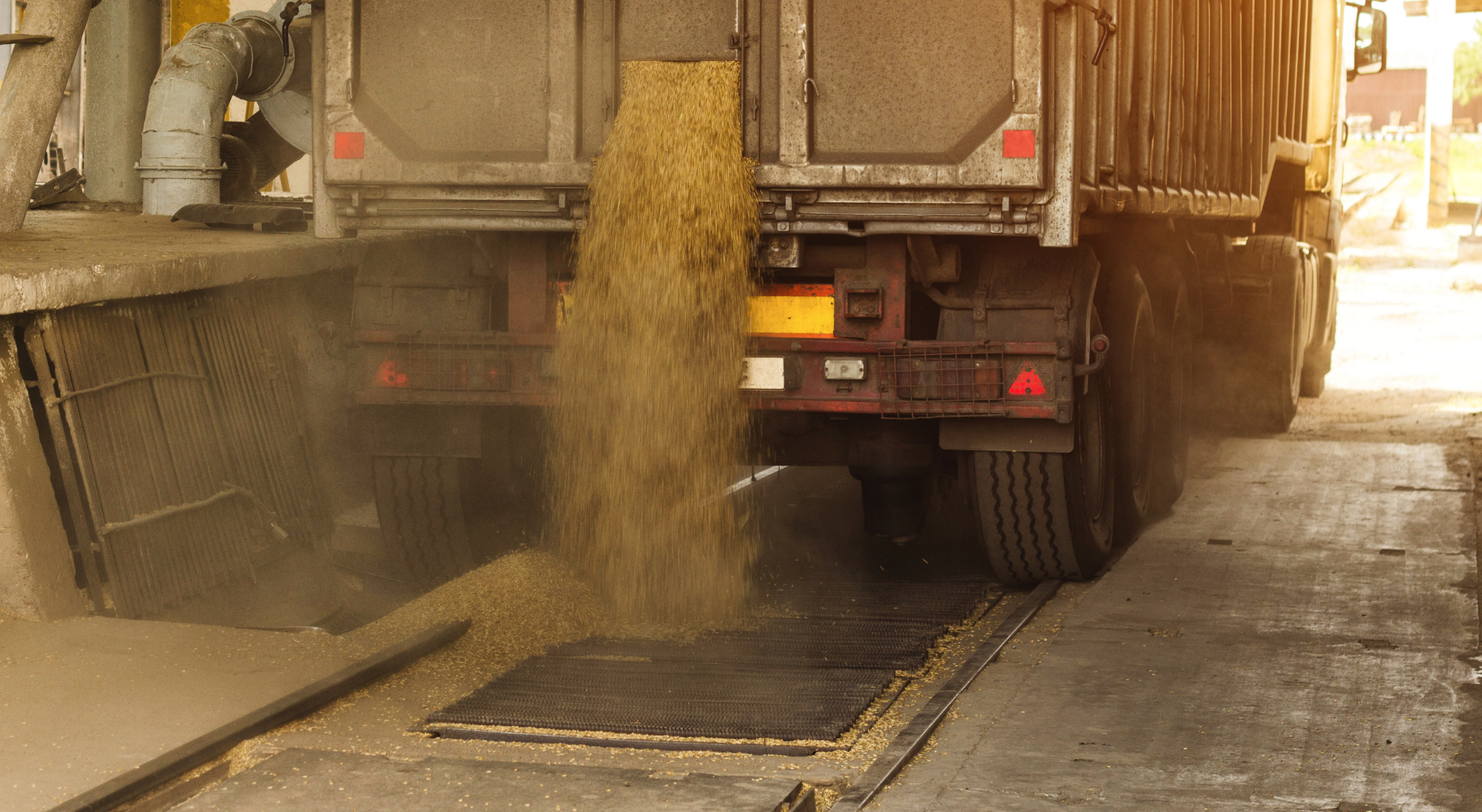
Receiving pit dust control stops the dust cloud that forms when bulk material is tipped from a truck or rail car into a receiving pit or hopper. Passive baffles installed inside the pit contain that dust at the source without slowing the unload.
In agriculture, grain handling and bulk material handling, material free-falling into a receiving pit displaces air and pushes dust up and out on every tip, making it a product loss problem as much as a safety one. Burnley® Baffles fugitive dust suppression works without water, power or ongoing consumables, eliminating up to 80% of dust during truck and rail unloading, or up to 100% when paired with a dust collector. Because fast movement of product off trucks and rail is critical, the baffles do not slow the unloading process. They also serve ports and rail unloading terminals.
Personnel Cleaning and Dust Removal at the Boundary
A personnel cleaning station removes dust from a worker’s clothing before they leave a dusty area and enter a clean one. It stops respirable dust from traveling on uniforms into break rooms, vehicle cabs and offices.
In mining and quarrying, workers finishing a shift carry fine dust on their clothing, spreading exposure to colleagues who were never near the dust source. The Bat Booth® walk-through personnel cleaning booth runs an automated 10-second cycle that removes respirable dust from clothing and reduces respirable dust exposure peaks by up to 88% when used consistently. Its design is based on the clothes cleaning technology developed through National Institute for Occupational Safety and Health (NIOSH) research. The same approach suits grain, feed mill and bulk handling operations.
Clean Air Inside Control Rooms and Operator Cabins
Room pressurization keeps dust out of occupied enclosed spaces by filtering incoming air and holding the room at positive pressure. It protects the people who spend their whole shift inside a control room, operator cabin or site office.
In mining and quarrying, control rooms, operator cabins, break rooms and site offices sit inside and near dusty environments, and the people at risk include fixed operators and administrative staff, not only workers walking in from the plant. The Bat Vent® filtration unit for control rooms and enclosed spaces draws in outside air, passes it through a three-stage filtration system including HEPA filtration, and maintains positive pressure so untreated air cannot leak in. It also filters the air already circulating inside the room. The same approach suits heavy industrial sites with occupied enclosed spaces.
How the Applications Work Together
Personnel cleaning and room pressurization work together as complementary layers of personnel and workplace protection. The cleaning station is the first layer, removing dust at the boundary before a worker enters a clean space. Pressurization is the second layer, keeping untreated air out of the space itself. Together, they address both dust carried into the space by people and dust entering from the surrounding environment.
Receiving pit dust control addresses a different part of the dust-management system: the source. Installed in receiving pits, Burnley® Baffles help contain fugitive dust where bulk material enters the facility, reducing the amount of dust released into the surrounding work area. Together, these applications demonstrate a broader approach to dust management: managing dust at the source, at the worker boundary, and within occupied spaces. See how each performs on site in our US dust control case studies.
Frequently Asked Questions
Dust suppression stops dust from becoming airborne in the first place, for example by containing it inside a receiving pit as material is tipped. Dust collection captures dust that is already airborne and draws it through filters. Many bulk handling sites combine the two, with suppression at the source and a dust collector where full containment is required.
Start with where the dust comes from and who is exposed. If workers carry dust out on their clothing, a personnel cleaning station applies. If dust escapes when trucks or rail cars unload into a pit, receiving pit dust control applies. If people work inside rooms or cabins on a dusty site, room pressurization and filtration applies.
Yes, and they are designed to be. A personnel cleaning station removes dust from clothing before a worker enters a clean space, while room pressurization keeps untreated outside air from entering that space. Each covers an exposure route the other does not, so together they protect both the boundary and the room itself.
Not Sure Which Application Fits Your Site?
Tell us about your operation and our team will recommend the right dust control approach.
Request a quote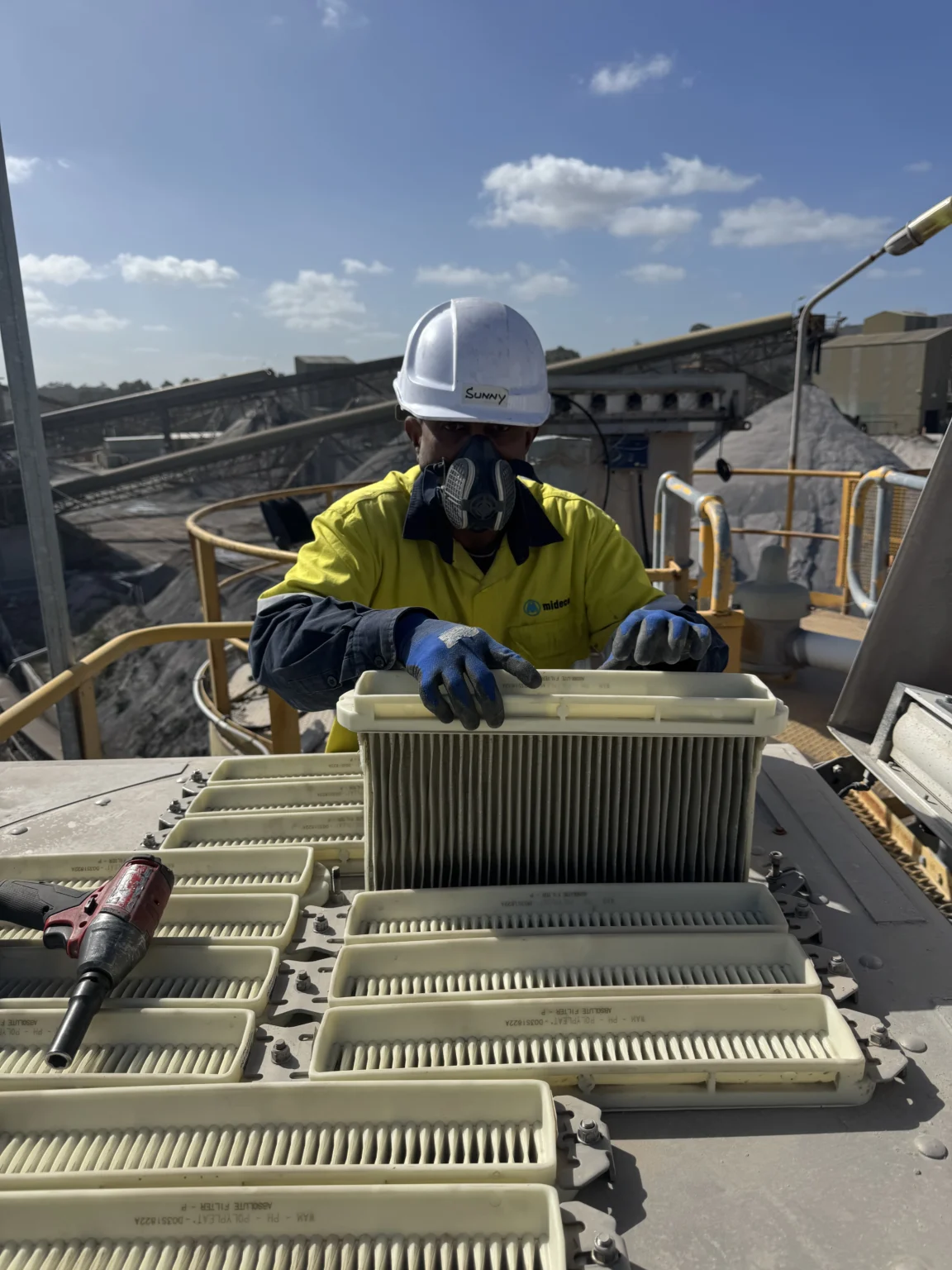
"Mideco provided effective routine servicing of our smelter Bat Booths, keeping the equipment operational and enabling personnel to safely utilise them for dust management. They are also very flexible with servicing coordination and always easy to contact."
Jake Dalla Valle
Asset Management Planner, BHP Olympic Dam

“The Bat Booth is actually unreal. We have got night shift workers, and it’s a lot faster and more efficient to use. Instead of relying on a simple handgun, this equipment really gets the job done quickly and effectively.”
Alex Stevenson
Leading Hand, Hanson Wolffdene Quarry

“The Bat Booth is very good. The maintenance guys use it the most because they get covered in dust and dirt during their work. It makes a huge difference in keeping them clean and comfortable. They really appreciate how effective it is for that purpose.”
John Taylor
Quarry Manager, Hanson Ferny Grove Quarry
“Bat Booth has been a great installation here at Glasshouse. It's allowed our guys at the end of the day, after they've done their maintenance and before they jump into their vehicles and head home to their families, to lock out of the MCC room and come into the Bat Booth and be de-dusted... to make sure that we're not increasing their exposure of respirable dust.”
Chris Wilson
Quarry Manager, Hanson Glasshouse Quarry
“We have used the Burnley Baffles successfully on several projects.”
Senior Project Manager, AMG, Inc.

Take the lead in workplace safety.
Request a quote for our advanced dust management solutions, including industry-leading dust extraction and dust collection systems.
Contact Mideco for a system that’s tailored to your facility’s operational and compliance requirements.
"*" indicates required fields

Mideco Jia Pty Ltd
Global leader in Dust Management Solutions since 1950. Supporting North American grain operations with industry-standard technology for over 40 years.Helper Links
Trusted by Industry Leaders








Copyright 2026 © Mideco
